That’s what buyer personas do. They turn a blurry “target audience” into a clear picture of real people with real goals, pains, and questions.
Ready to talk to the right clients?
⚡TL;DR:
- Build 3–5 simple personas from real data (clients, call notes, reviews, search queries).
- For each persona, define: short bio, goals, pain points, common objections, what proof they need, and the page blocks that answer them.
- Use real estate personas to guide your listings, website sections, emails, and ads. Track results and refine every quarter.
What is a buyer persona?
- Resident buyers/sellers: care about lifestyle, schools, commute, timeline, and total monthly cost.
- Investors: care about rent comps, cap rate, HOA rules, vacancy, and exit options.
Create My Site!
Why does your real estate business need buyer personas?
1. Better lead quality (less wasted budget)
2. Clearer messaging that moves deals forward
3. Smarter content and campaign planning
How to build buyer personas for your real estate business?
1. Gather quick data
- Pull the last 90 days of inquiries, call notes, and emails/DMs.
- Gather open-house questions and feedback.
- Check Google Search Console queries for your key pages.
- Run short interviews (5–10 clients, 10–15 min). Ask: “What started your search?”, “Top 3 must-haves?”, “Biggest worry right now?”
- Post quick polls on Instagram/LinkedIn/Facebook (e.g., “Schools or commute?”, “Fixer or move-in ready?”, “Max monthly payment?”)
2. Analyze your data
- First split by intent, for example: Resident (buying to live) vs Investor (buying for returns).
- Then split by life stage: First-time, Upsizer, Downsizer, Relocation, Luxury.
- Keep 3–5 active personas. Archive the rest to avoid overlap.
3. Create a buyer persons profiles
- Name + short bio
- Goals
- Pain points
- Triggers & objections
- Search behavior (how they can find you)
- (optional) Must-have page features
- (optional) Proof they trust (reviews, data, certifications)
4. Measure and refine
- Are you attracting more right-fit clients? Track the % of new inquiries that match your buyer personas. Aim for steady growth month over month.
- Are deals moving faster? Compare days to close and showings per offer before vs. after you launched persona pages/campaigns.
- Are your real estate marketing results improving? Check email CTR/reply rate, social ad CTR/CPL, and lead quality by source (mailing, social, PPC). You want lower cost per lead and higher qualified-lead %.
- Is your real estate website converting better - per persona page? Track: Conversion rate (form fills/calls ÷ visitors), leads generated, calls booked / tour requests.
Quarterly check-in: tune weak personas, and scale winning ones with extra pages, offers, and proofs.
Real-life real estate persona examples
1) Alex - First-Time Buyer (29)
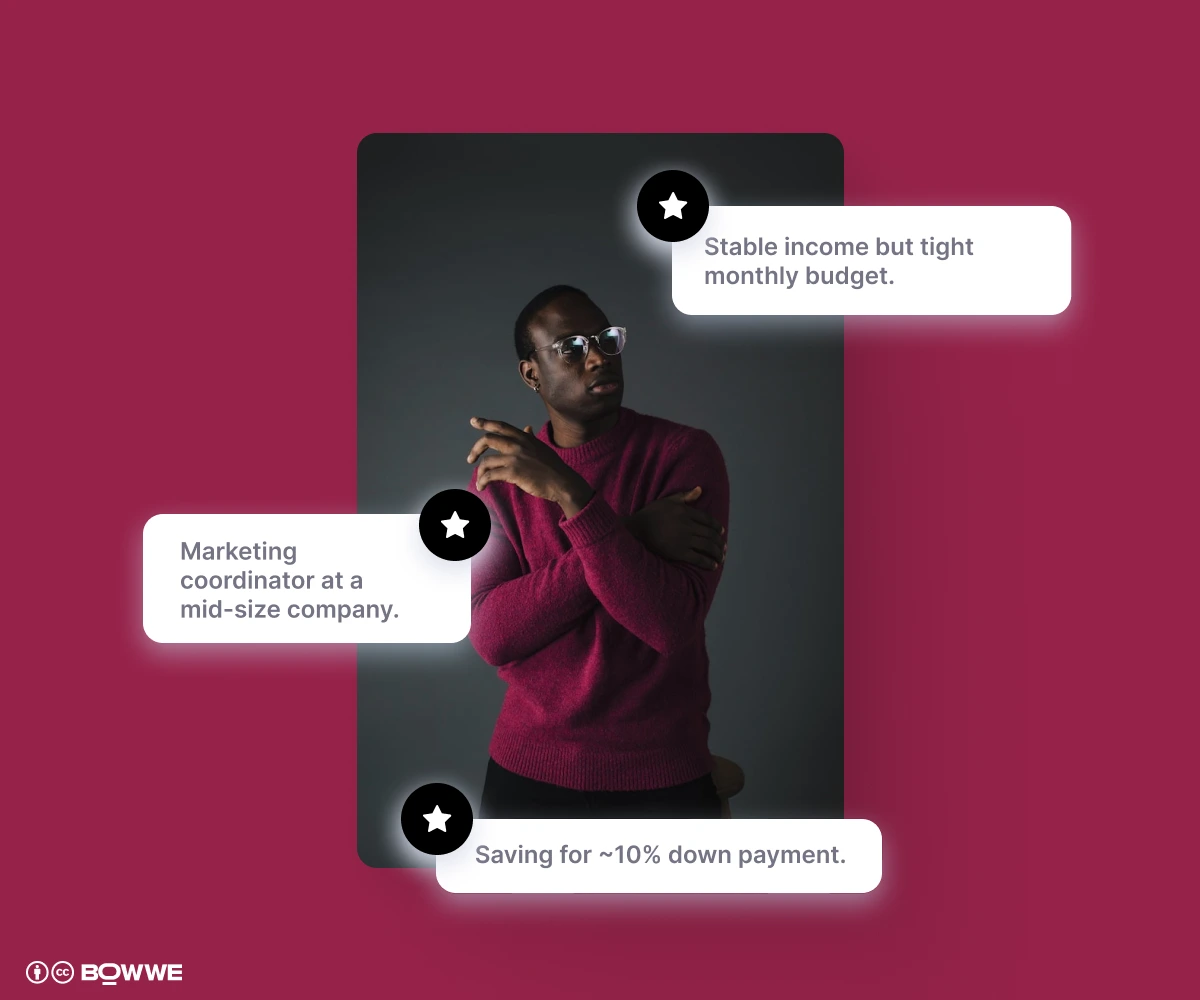
- Marketing coordinator at a mid-size company.
- Stable income but tight monthly budget.
- Rents with a partner in a 1-bed near downtown.
- Saving for ~10% down payment.
Goals:
- Safe neighborhood.
- Clear total monthly payment.
- Starter home near transit with a short commute.
Pain points:
- Unsure about pre-approval, debt-to-income ratio, and credit score impact.
- Afraid of hidden costs (inspections, estimation, deal closing costs).
- Doesn’t know the order of the home buying process.
Offer/website must-haves:
- Payment estimator with taxes included.
- Q&A (“FHA vs. conventional?”, “How big is PMI?”, “Can parents gift funds?”)
- Process timeline (week-by-week) explaining the path to deal closing.
- Neighborhood explainer with commute times, transit options, and nearby essentials.
- “First-time buyer friendly” badge on listings.
2. Priya - Move-Up Buyer (36)
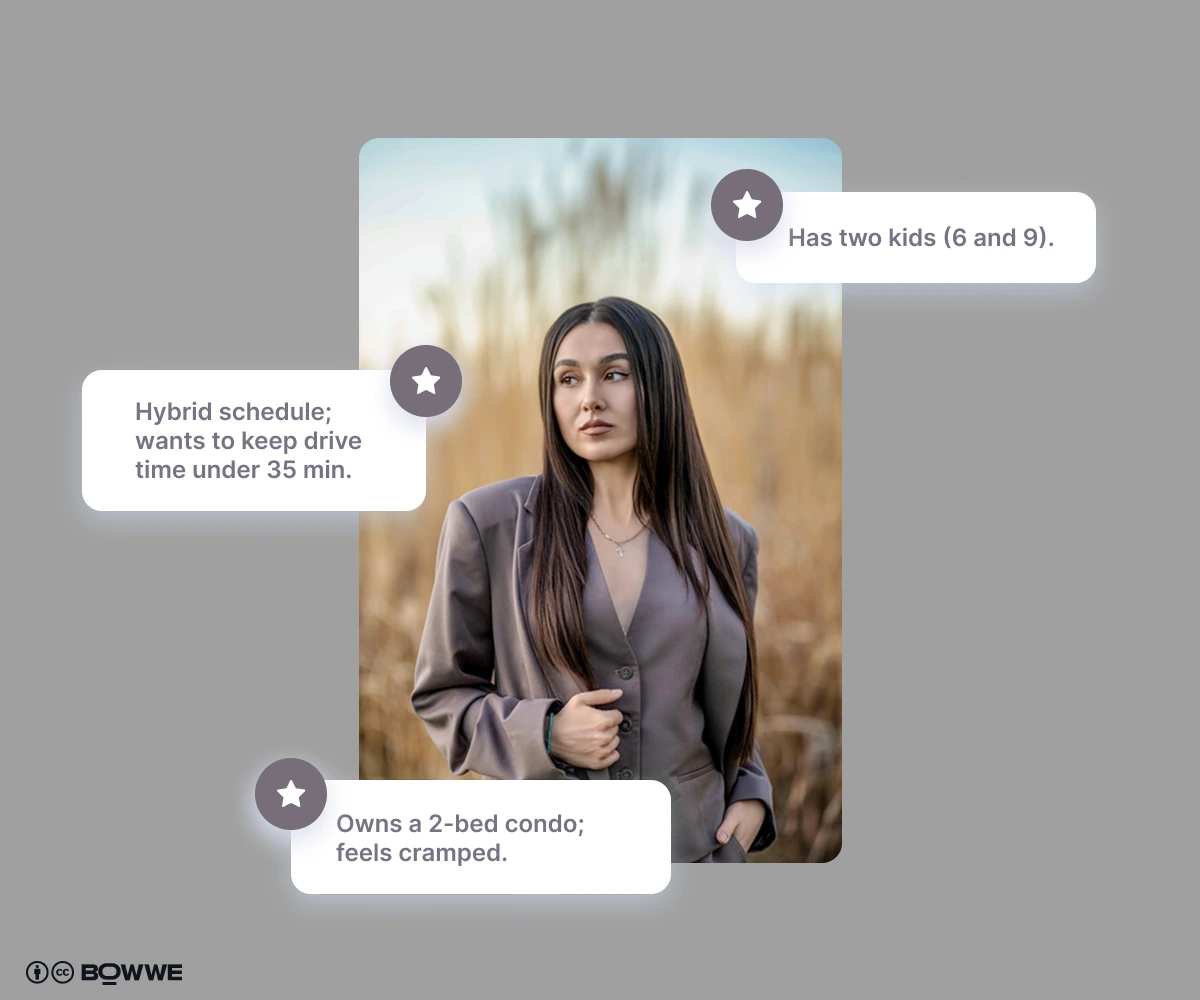
- Has two kids. (6 and 9); weekend sports and school activities drive most decisions.
- Owns a 2-bed condo; feels cramped.
- Equity to use from the condo sale.
- Commute matters; Hybrid schedule; wants to keep drive time under 35 minutes.
Goals:
- 3–4 bedrooms + real storage.
- Good schools.
- Reasonable commute.
- Yard and safer street for kids.
Pain points:
- Surprise costs like roof/HVAC issues, big repairs after move-in.
- Worries about selling too low or buying too high.
- Limited touring times because of kids.
Offer/website must-haves:
- School ratings + commute-time matrix.
- Trade-up checklist (sell→buy timeline).
- Next to price, estimated monthly cost beyond the mortgage: property tax, HOA (if any), typical utilities.
- Map of nearby parks, playgrounds, and weekend activities.
3. Adam - Relocation Professional (34)
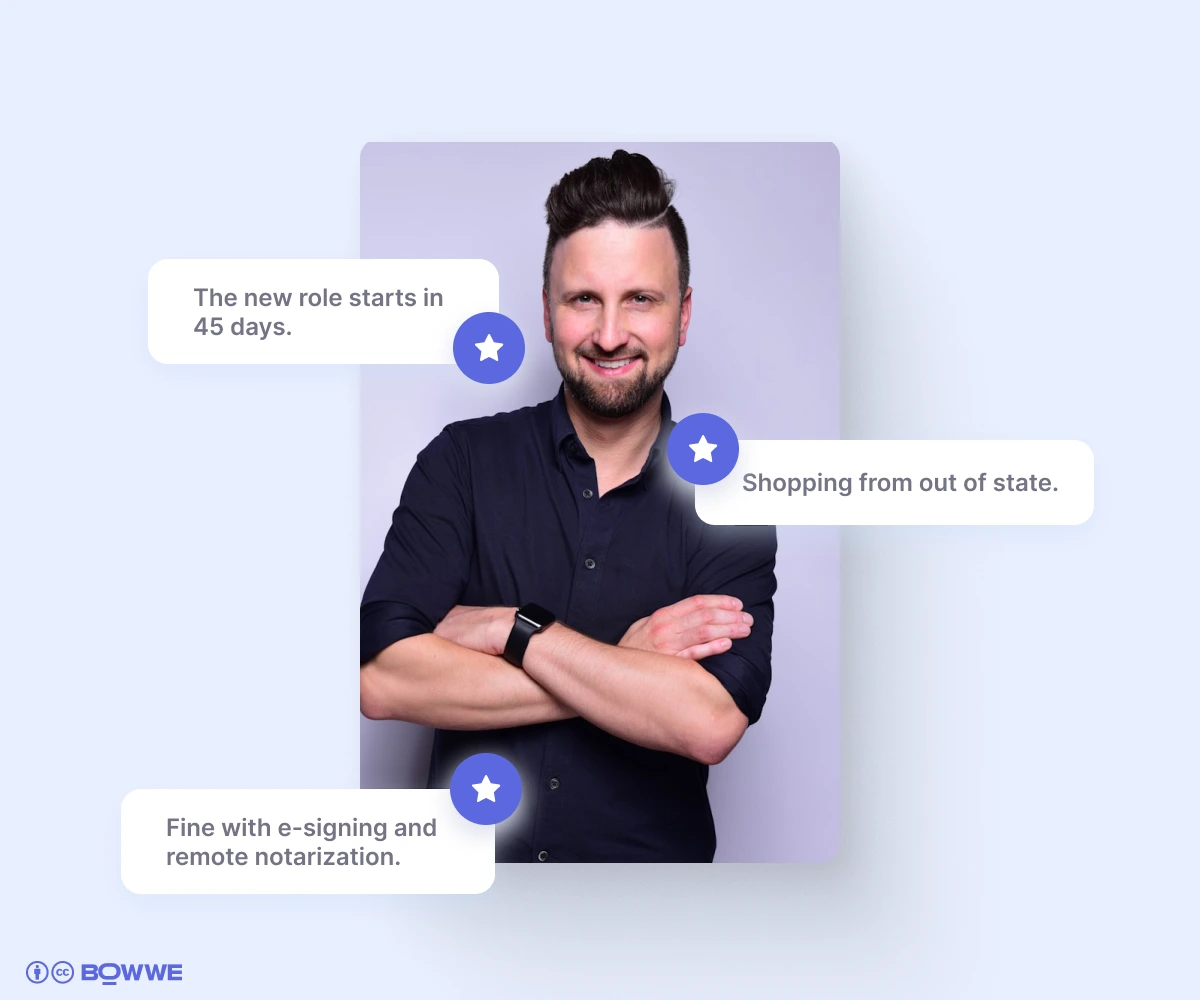
- The new role starts in 45 days; the company offers a modest relocation stipend but no temp housing.
- Shopping from out of state; currently living in a short-term rental with a packed schedule.
- Decision makers: Adam + partner; both work full-time. They can do one in-person weekend trip if needed.
- Paperwork comfort: Fine with e-signing and remote notarization but wants a clear step-by-step.
Goals:
- Ready to move home.
- Fast, remote-friendly closing.
- Clear neighborhood vibe.
Pain points:
- Must choose quickly; fears making a “sight-unseen” mistake.
- Can’t tour in person.
- Worries about inspectors, lenders, and movers in a new city.
Offer/website must-haves:
- Virtual tour + live video walk-through option,
- Remote-close steps (e-sign, inspection),
- Neighborhood details with commute times (rush hour), hospital/urgent care, gyms, groceries, parks.
- Promise five best-fit options within 48 hours.
4. Sam - Buy-to-Let Investor (41)
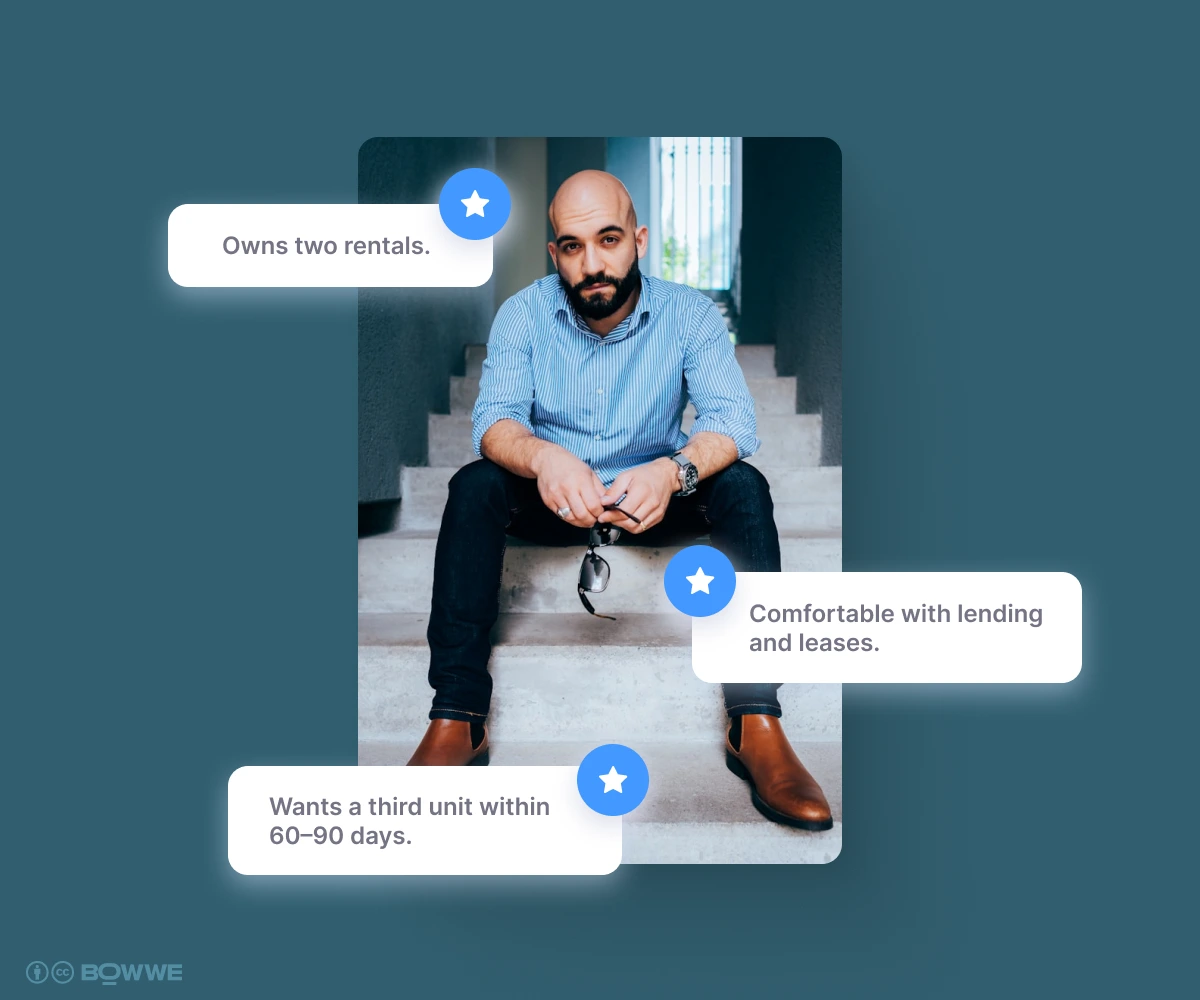
- Owns two rentals; comfortable with lending and leases.
- Wants a third unit within 60–90 days; compares multiple cities and zip codes.
- Data-driven approach; prefers clear assumptions over marketing jargon.
Goals:
- Clear exit options.
- Low vacancy.
- Straightforward rental management.
Pain points:
- Surprises around rentals, pets, short-term rental bans.
- Listing prices ≠ signed leases; needs actual rents.
- Concern that small-unit condos in certain areas are hard to sell quickly.
Offer/website must-haves:
- Side-by-side leases for similar beds/baths within the last 6–12 months.
- A tiny market card: average days-to-rent, renewal rate, typical tenant (professionals, students, families), seasonality notes.
- List the actual clauses that affect renting, subletting, pets, and the number/type of parking spaces.
How to use buyer personas in your real estate business
1. On your website
- Create persona pages: /first-time-buyers, /investors, /relocation, /sell-your-home.
- Match sections to needs: First-time buyer → payment estimator, loan FAQ, weekend tour CTA, Relocation → virtual tour, remote-close steps, “48-hour shortlist” form.
- Add FAQs by persona and mark them up with FAQ schema.
2. In your SEO & content
- Use keywords based on persona: First-time: “FHA vs conventional in [City]”, “how much house can I afford [City]”, Investor: “cap rate [City]”, “average rent [Neighborhood]”
- Link related pages to each other: Persona pages ↔ area/neighborhood pages ↔ listings ↔ relevant blog posts.
- Add FAQ with schema: Add 4–6 Q&As that mirror each persona’s top questions.
3. In your social & ads
- Match content to persona: First-time → reels on down-payment myths; weekend tour invites, Upsizer → carousel of yards, storage, nearby schools
- Person-based ads targeting: Interests + geo + life events (new job, new baby, moving).
- Retargeting: Send visitors from persona pages to matching lead magnets (checklists, calculators).
4. In your sales process
- Open-house scripts: 3 qualifying questions per persona (budget method, timeline, deal-breakers).
- Follow-ups: Email/SMS templates that mirror their objections (financing, HOA rules, inspection fears).
- Virtual tour options: Live video walk-through + 3D tour + narrated pros/cons.
Real estate buyer personas - summary
- Pick 3–5 real personas you can actually serve right now.
- Give each one a page, proof, and offer that answers their real questions.
- Measure results per persona page, then tune weak ones and scale winners.
Create My Site!
Real estate buyer personas - FAQ
How many real estate personas do I need?
What should be in a real estate persona?
How often should I update personas?
Do real estate personas help SEO or just ads?
What are types of buyer personas in real estate?
- First-time buyers – need extra guidance and education.
- Move-up buyers – looking for larger or more luxurious homes.
- Downsizers – often retirees seeking smaller, low-maintenance properties.
- Investors – focused on ROI, rental income, or flipping opportunities.
- Relocators – moving for work, lifestyle, or family reasons.

Karol is an entrepreneur, e-commerce speaker among others, for the World Bank, and founder of 3 startups, as part of which he has advised several hundred companies. He was also responsible for projects of the largest financial institutions in Europe, with the smallest project being worth over €50 million.
He has two master's degrees, one in Computer Science and the other in Marketing Management, obtained during his studies in Poland and Portugal. He gained experience in Silicon Valley and while running companies in many countries, including Poland, Portugal, the United States, and Great Britain. For over ten years, he has been helping startups, financial institutions, small and medium-sized enterprises to improve their functioning through digitization.