⚡TL;DR:
- Start with buyer keywords + pages: “bulk diesel delivery,” “fleet fueling contract,” “heating oil delivery,” “LPG supply,” plus location pages like “diesel delivery in [region].”
- Make trust obvious: certificates, SDS/specs, service coverage, response times, testimonials, and a clean quote/contact flow.
- Win local visibility: Google Business Profile, consistent NAP, real photos, and reviews you actually reply to.
- Create content that reduces anxiety: blog posts + checklists buyers already ask for (pricing, compliance, storage, delivery planning).
- Capture leads with a simple lead magnet: put a checklist behind a form, then follow up with email.
- Stay visible: practical emails + real ops posts on LinkedIn/Facebook + niche partners (not “influencers,” actual industry pages).
- Track the basics monthly: top queries, top pages, leads per page — improve what’s already close to working.
Create Your Website
What actually wins fuel distribution contracts online
- reliability
- safety and compliance
- documentation
- delivery coverage
- response time
- price stability (in B2B)
- contract clarity
If your website is built on a structure designed for fuel distribution – certifications, delivery areas, station/depot locator, B2B zone, reviews, documents, and a blog – promotion becomes easier because the site is already built to convert.
1. Get found when buyers need a supplier (SEO that drives inquiries)
1.1 Build pages the way real fuel buyers search
Service pages (core money pages):
- Bulk diesel delivery
- Fleet fueling / contract supply
- Heating oil delivery
- LPG supply
- Fuel storage solutions (if you offer tanks or support)
- Fuel cards / loyalty programs (if relevant)
Location pages (how local deals happen):
- “Diesel delivery in [region/city]”
- “Wholesale fuel supplier [region]”
- “Fuel depot / gas station [city]” (if you have retail)
1.2 Make the content speak to decision-makers (use personas as a filter)
Arthur (fleet / transport owner) wants stable pricing, reliable delivery, flexible volumes, and clear compliance reporting. Your fleet page should explain scheduling, backup options, documentation, and how you handle recurring bulk orders – then end with one CTA like “Get a Fleet Quote.”
Jack (farm owner) cares about seasonal availability, fuel quality, and safe on-site storage. Your agriculture page should highlight seasonal planning, quality standards, storage guidance, and fast contact options (phone + short form) – with a CTA like “Request a Delivery Plan.”
Brian (procurement, multi-site) needs predictable deliveries, compliance documentation, and audit-ready reporting. Your B2B page should lead with certificates/SDS/specs, SLAs, reporting, and a CTA like “Request a Supply Proposal.”
1.3 Quick SEO wins that cost $0
- Put your main keyword in the page title (H1) naturally
- Add short FAQs at the bottom of key pages
- Make sure every page has one clear CTA (not ten). CTA = Call to Action (main button/link), e.g. “Get a Quote”, “Request a Supply Proposal”, “Check Delivery Area”, “Request a Delivery Plan”, “Call Now.”
- Don’t hide your phone number – make it clickable on mobile
- Speed matters: compress images and avoid heavy video on the homepage
2. Build trust and capture leads (content + proof)
2.1 Use a blog to build trust before the first call
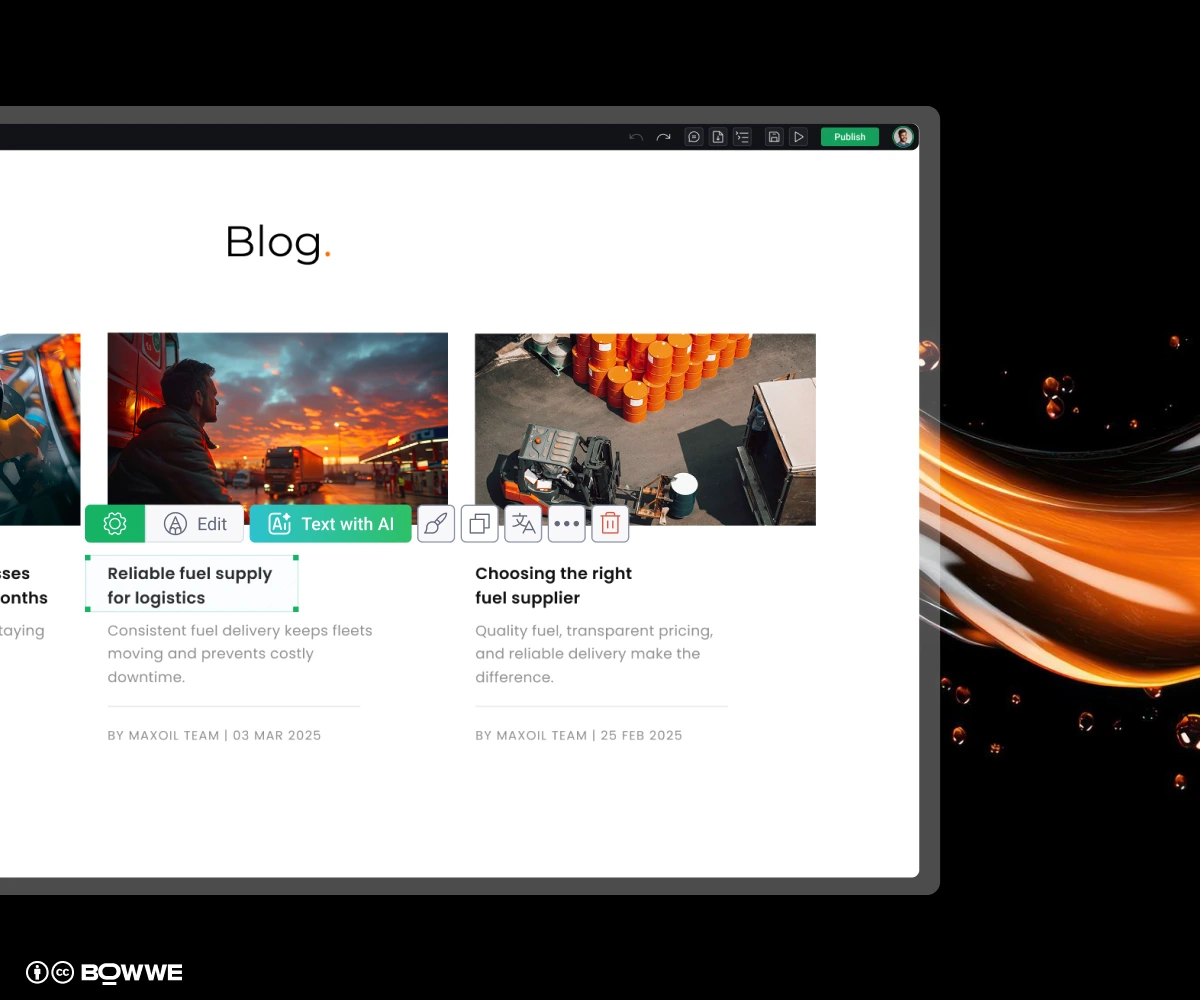
Here are topic sets aligned to your three core personas:
For fleets / transport (Arthur):
- “Fleet fuel contracts: how pricing works (and what changes it)”
- “How to prevent fuel downtime with reliable delivery scheduling”
- “Bulk diesel orders: how to negotiate volume + flexibility”
- “Fuel supplier checklist for transport companies (what to verify before signing)”
For farms (Jack):
- “On-site diesel delivery for farms: how it works + what to prepare”
- “How to store diesel safely on-site (simple farm checklist)”
- “Fuel quality basics: what protects your equipment (and what doesn’t)”
- “Heating oil + diesel planning for peak season (when to order and why)”
For procurement / multi-site supply (Brian):
- “Fuel supplier compliance checklist (documents procurement needs)”
- “How to set SLAs for fuel deliveries across multiple sites”
- “One supplier vs. multiple suppliers: reducing risk in fuel distribution”
- “Audit-ready fuel supply: what reporting and documentation to require”
Posting schedule: keep it realistic. One genuinely helpful post per month is enough – especially if you reuse that post in email and social.
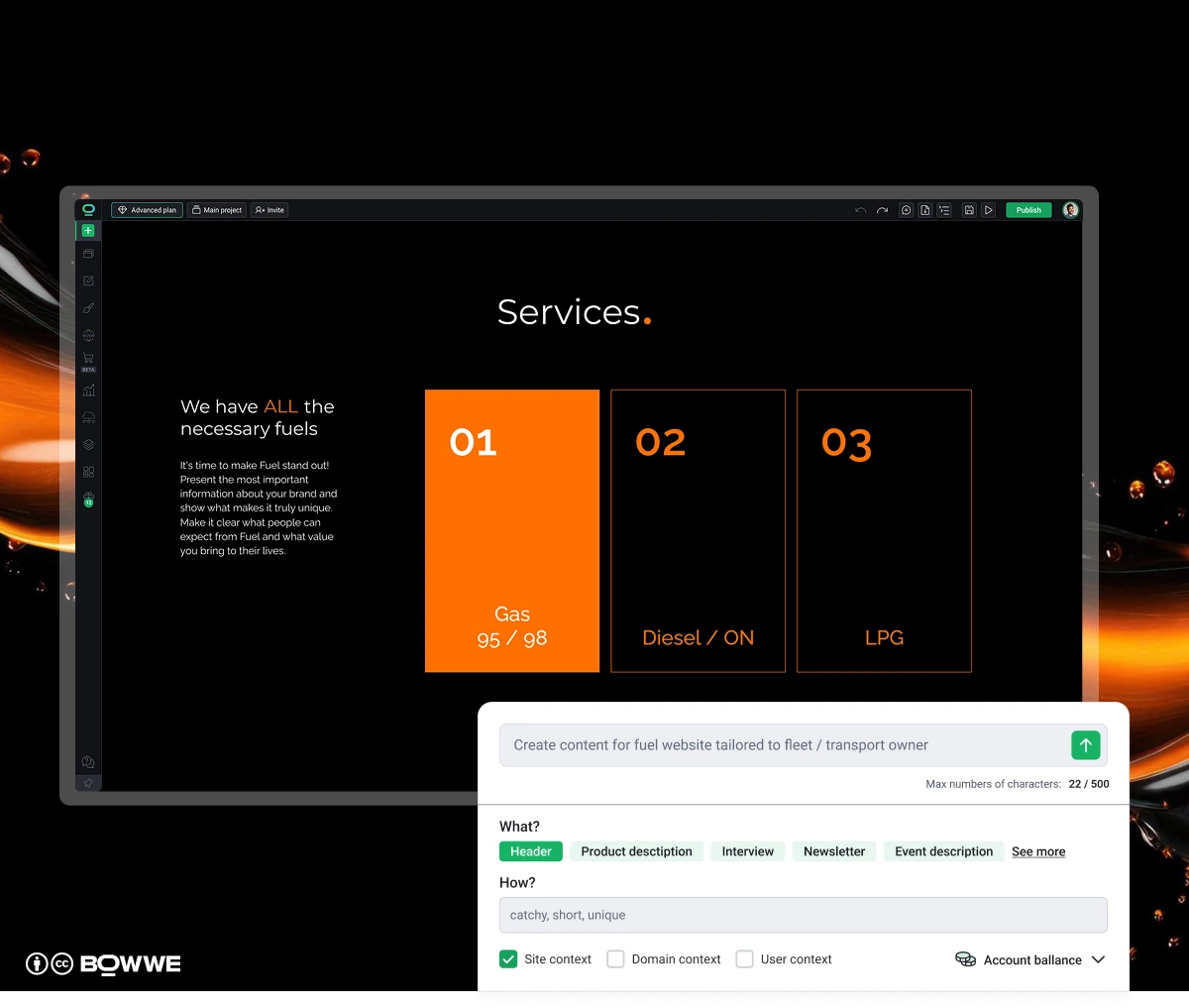
And if you’re using BOWWE’s Blog Builder, you can publish faster because everything is built in: templates, SEO settings, and mobile-friendly layouts, so you can focus on writing, not tech setup.
2.2 Turn website visitors into leads with free resources buyers actually want
The important part: don’t offer the resource as a public download. Put it behind a simple contact form. The visitor enters their email (and optionally company name), and you automatically send the resource by email – either as a PDF attachment or a download link. That way, you get a real lead instead of an anonymous download.
Good low-effort lead magnets for fuel distribution:
- Bulk delivery readiness checklist (site access, safety, timing, documents)
- Fuel storage safety checklist (simple, practical steps)
- Fleet fuel cost tracker (simple spreadsheet)
- Seasonal fuel planning guide for farms
- Procurement checklist for B2B buyers (what to verify before signing)
You’re not doing this to “collect emails.” You’re doing it to create a pipeline of buyers who already trust you.
2.3 Create proof buyers actually share (simple visuals beat long explanations)
Create content that’s easy to share:
- 1-page infographic: “Top causes of fuel downtime (and prevention)”
- short customer testimonials and reviews (name + company type + result, e.g. “On-time deliveries across 3 sites”)
- “Fuel quality: what to check before buying”
- short videos showing real operations (loading, testing, safety checks)
- photo posts with a practical caption: “3 mistakes that ruin stored diesel”
And yes: real photos beat stock photos every time. Stock images make you look like a “fake it till you make it” operation. Real operations make you look established.
2.4 Add one simple tool that converts visitors into quotes
Examples that fit fuel suppliers/distributors:
- simple quote estimator (volume + location + frequency -> inquiry)
- fuel volume calculator (useful for farms and job sites)
- station/depot locator with filters (if relevant)
- delivery planning form (collect the details your sales team needs)
This is also where BOWWE’s Builder approach helps: you can add forms, sections, and conversion blocks quickly without turning the project into a development marathon.
3. Stay visible until buyers are ready (email + social + partnerships)
3.1 Email that keeps you top-of-mind until they’re ready to sign
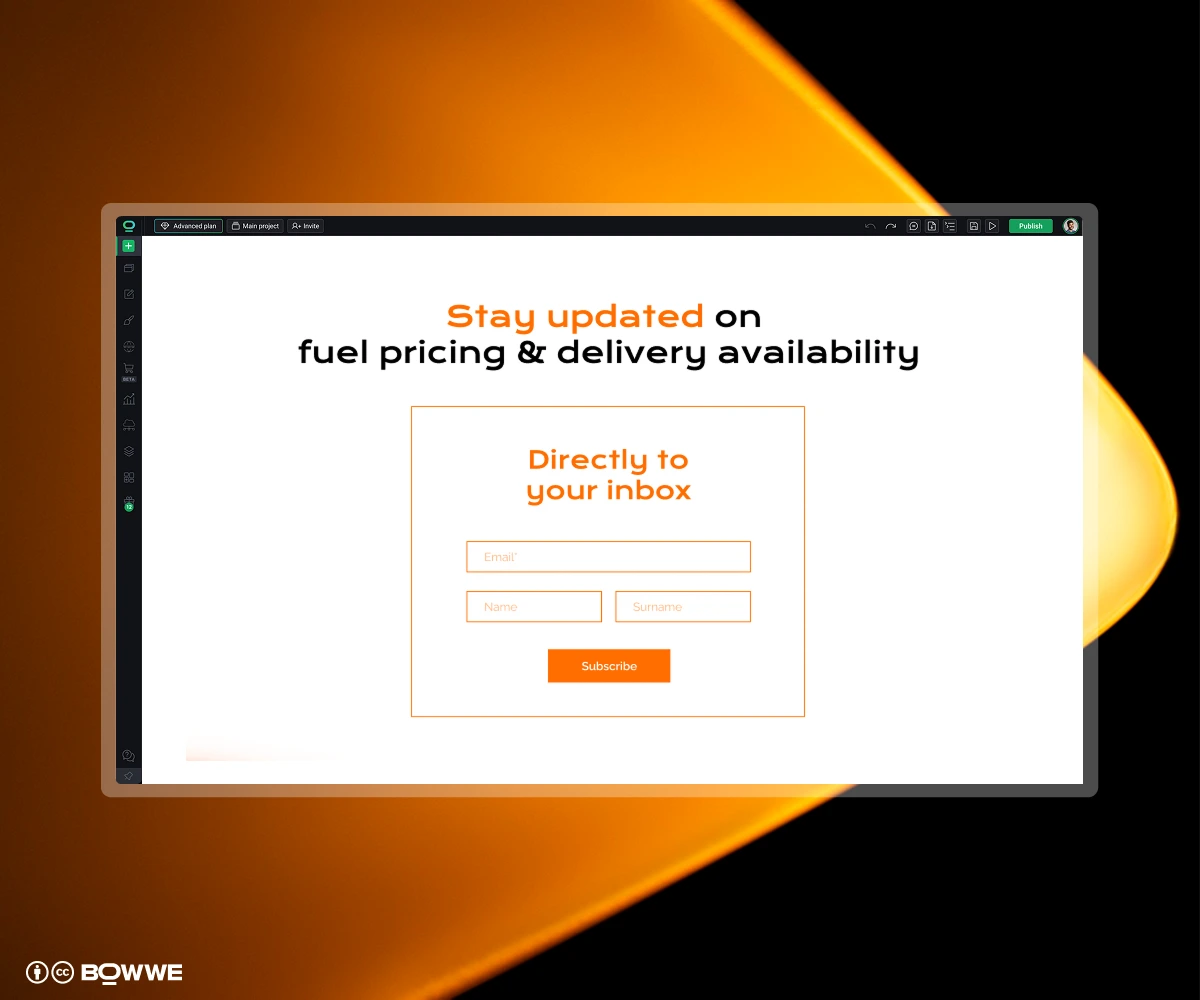
Campaign ideas:
- “Winter fuel prep checklist”
- “Harvest season delivery planning reminders”
- “Fleet contract renewal timeline + options”
- “Monthly short market update (practical, not political)”
- loyalty program updates (B2C)
3.2 Show real operations publicly (social that builds confidence)
LinkedIn works for procurement and logistics. Facebook groups can work for farming and local business communities. Your goal isn’t entertainment – it’s credibility.
Post operational reality: delivery recaps, behind-the-scenes quality checks, team spotlights, and “problem solved” stories (no client names needed). If you only post polished corporate graphics, you’ll feel distant. If you show real operations, you’ll feel reliable. Reliability wins.
3.3 Turn offline visibility into inbound leads with QR codes
Use QR codes on trailers, station signage, printed documents, delivery confirmations, and business cards to guide potential buyers directly to the next step: your RFQ form, delivery coverage page, pricing inquiry, or fuel supply landing page.
This works especially well in fuel and distribution because your brand moves through farms, depots, construction sites, and industrial zones constantly. People already see your operations in the real world. A QR code gives them an immediate way to act on that attention.
Keep it practical and frictionless. Don’t just place the code, but add a clear CTA beside it, like “Scan for bulk fuel pricing” or “Scan to request business delivery.” Small changes like this can turn everyday operational visibility into consistent inbound interest.
3.4 Borrow trust from niche partners (influencers, industry pages, newsletters)
Offer a practical angle: a checklist, Q&A, safety guide, or “how it works” walkthrough. The goal isn’t views. The goal is credibility and warm leads.
3.5 Earn authority without paying for ads (guest posting + backlinks)
Write practical topics – storage, planning, quality standards, contract basics, and link back to your service pages so traffic converts.
4. Local credibility that closes deals (Google Business + reviews)
4.1 Keep Google Business accurate and active
In your business description and services, use the keywords buyers search (e.g., bulk fuel delivery, diesel delivery, wholesale fuel supplier, fleet fueling) and include your service area (cities/regions). Treat it like a living asset – update photos, services, and posts regularly, not a one-time setup.
4.2 Treat reviews like revenue
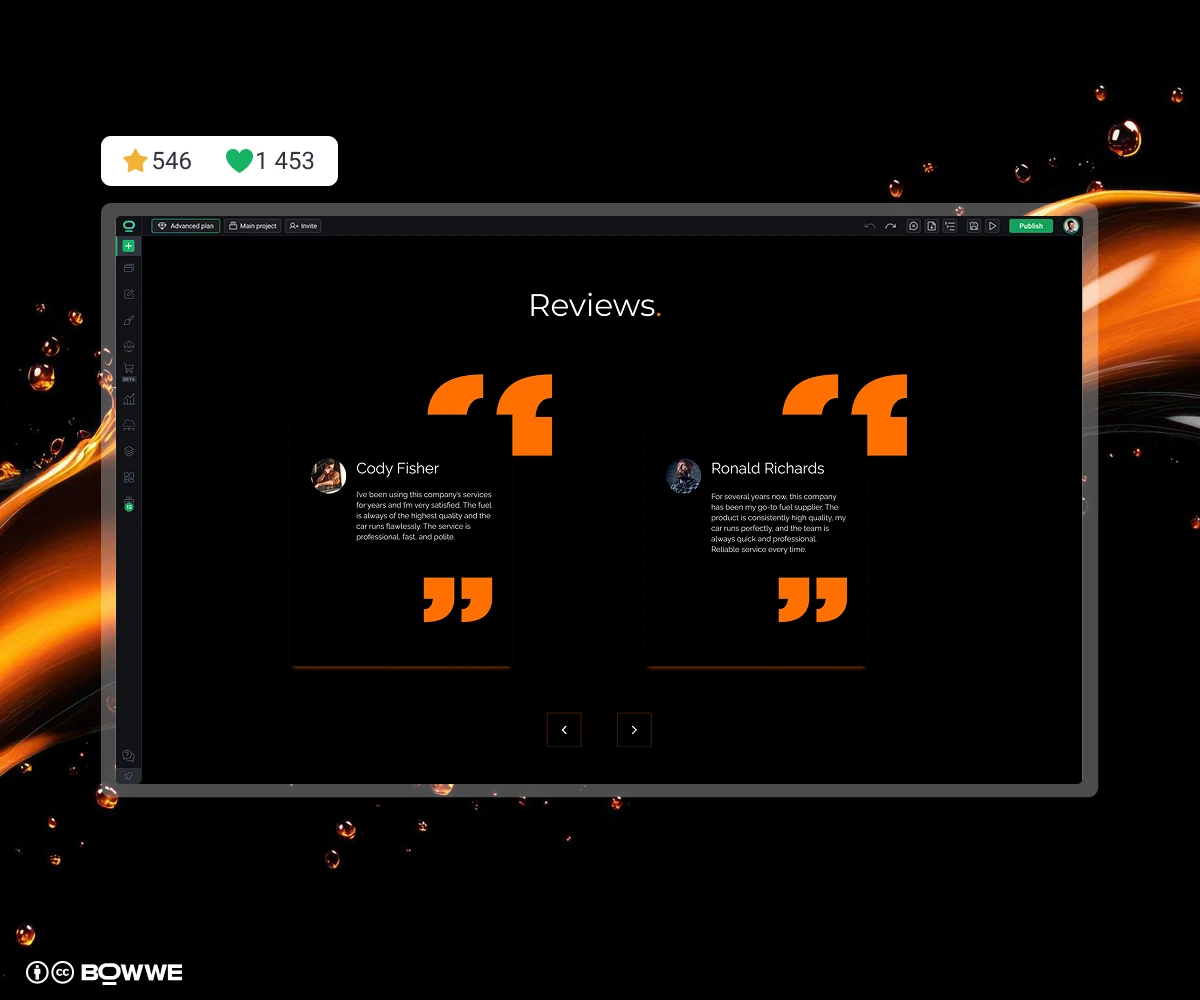
Ask consistently (especially after smooth deliveries), respond to every review (even negative ones), and display testimonials on your website near your main CTA – where they actually influence decisions.
Ready to promote your fuel distribution website?
- Build/upgrade your site structure: service pages, trust sections, fast contact
- Publish 1 blog post per month answering real buyer questions
- Create 1 lead magnet (checklist) and put it behind a form
- Post real operations photos weekly (LinkedIn/Facebook)
- Set up Google Business + collect reviews consistently
- Repurpose everything into email (seasonal + practical)
Consistency beats “big campaigns.” A fuel distribution website that gets updated, shows real proof, and answers real questions will out-sell a flashy site that’s neglected.
Create Your Website
Fuel & distribution marketing - FAQ
What pages should a fuel distribution website have to win B2B contracts?
What’s the fastest SEO win for fuel suppliers?
How important are Google reviews for fuel distributors?
How long does it take to see results from SEO for fuel distribution?

Karol is an entrepreneur, e-commerce speaker among others, for the World Bank, and founder of 3 startups, as part of which he has advised several hundred companies. He was also responsible for projects of the largest financial institutions in Europe, with the smallest project being worth over €50 million.
He has two master's degrees, one in Computer Science and the other in Marketing Management, obtained during his studies in Poland and Portugal. He gained experience in Silicon Valley and while running companies in many countries, including Poland, Portugal, the United States, and Great Britain. For over ten years, he has been helping startups, financial institutions, small and medium-sized enterprises to improve their functioning through digitization.