
They lose them because buyers can’t see them online.
Fleet owners want delivery certainty. Farmers want fuel when the season hits. Procurement managers want documentation, reporting, and audit safety. If your fuel & distribution website doesn’t clearly show all of that, Google won’t rank it – and buyers won’t contact you.
This guide shows exactly how SEO works in the fuel & distribution industry, based on years of industry analysis and real buyer behavior. No theory. Just what actually brings B2B clients.
⚡TL;DR:
- Focus on buyer-intent keywords, not just search volume
- Create dedicated service pages (one service = one page)
- Add location/coverage pages to show where you operate
- Make trust signals clear (certifications, process, reviews, docs)
- Structure your site based on how buyers search, not like a brochure
- Publish practical blog content that answers real buyer questions
- Optimize meta titles, descriptions, URLs, and images
- Ensure your site is fast, mobile-friendly, and secure (SSL)
- Track performance with Google Search Console & GA4
What is fuel & distribution SEO?
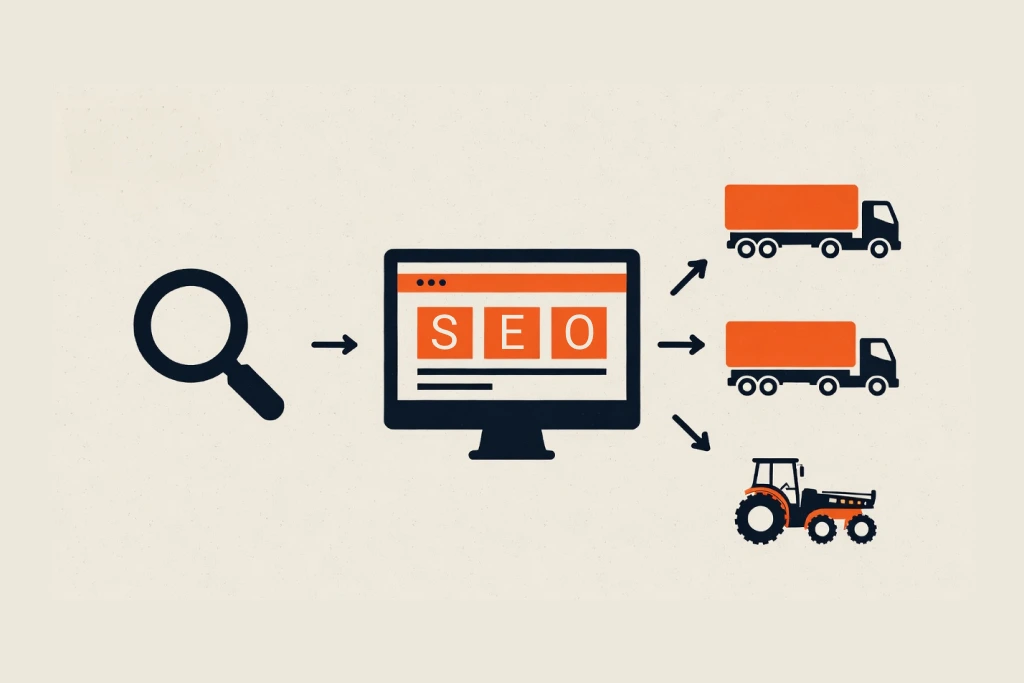
Fuel & distribution SEO is simply optimizing your website so it shows up when buyers search for suppliers and services you actually sell, and so the page they land on clearly explains what you provide, where you operate, and how to get in touch.
What matters here is not just visibility, but relevance. Buyers want to quickly confirm that you offer the right service, operate in their area, and can handle their requirements. That’s why your SEO strategy should focus on clear service pages, coverage information, and useful business details – not just broad visibility.
Create Your Website

Why fuel SEO matters (more than you think)
Fuel & distribution SEO helps you show up when buyers search, but the bigger benefit is this: a well-structured site reduces back-and-forth and shortens sales cycles. When your pages clearly show coverage, process, documentation, and trust signals, you get fewer low-quality leads and more serious inquiries.
Fuel & distribution SEO strategy (step by step)
1. Keyword research: how your customers actually search
Use tools like Ahrefs, Semrush, Google Trends, and Google autocomplete. Then check the search results for your target keywords and look at what’s ranking. In fuel, you’ll usually notice three keyword types that matter:
- Service intent: searches that describe what you deliver (bulk diesel delivery, fleet fueling services, heating oil delivery, LPG supply).
- Local intent: searches that include a region, city, or “near me.”
- Risk/compliance intent: searches that come from procurement thinking (SDS, certificates, supplier documentation, delivery process, reporting).
If you want a simple rule: pick keywords where you’d be happy if the searcher called you today.
2. Build pages around search intent
For SEO, your site structure should reflect the way buyers search. That usually means creating separate pages for the core services you offer and the areas you serve.
A strong structure usually includes:
- Service pages (one service = one page, clear keyword focus, one CTA)
- Location/coverage pages (where you deliver and how it works regionally)
- Trust content (documents, certifications, process, reviews, FAQs)
This kind of structure helps search engines understand what each page is about and gives you a better chance of ranking for relevant keywords. It also makes the site easier for buyers to navigate once they land on it.
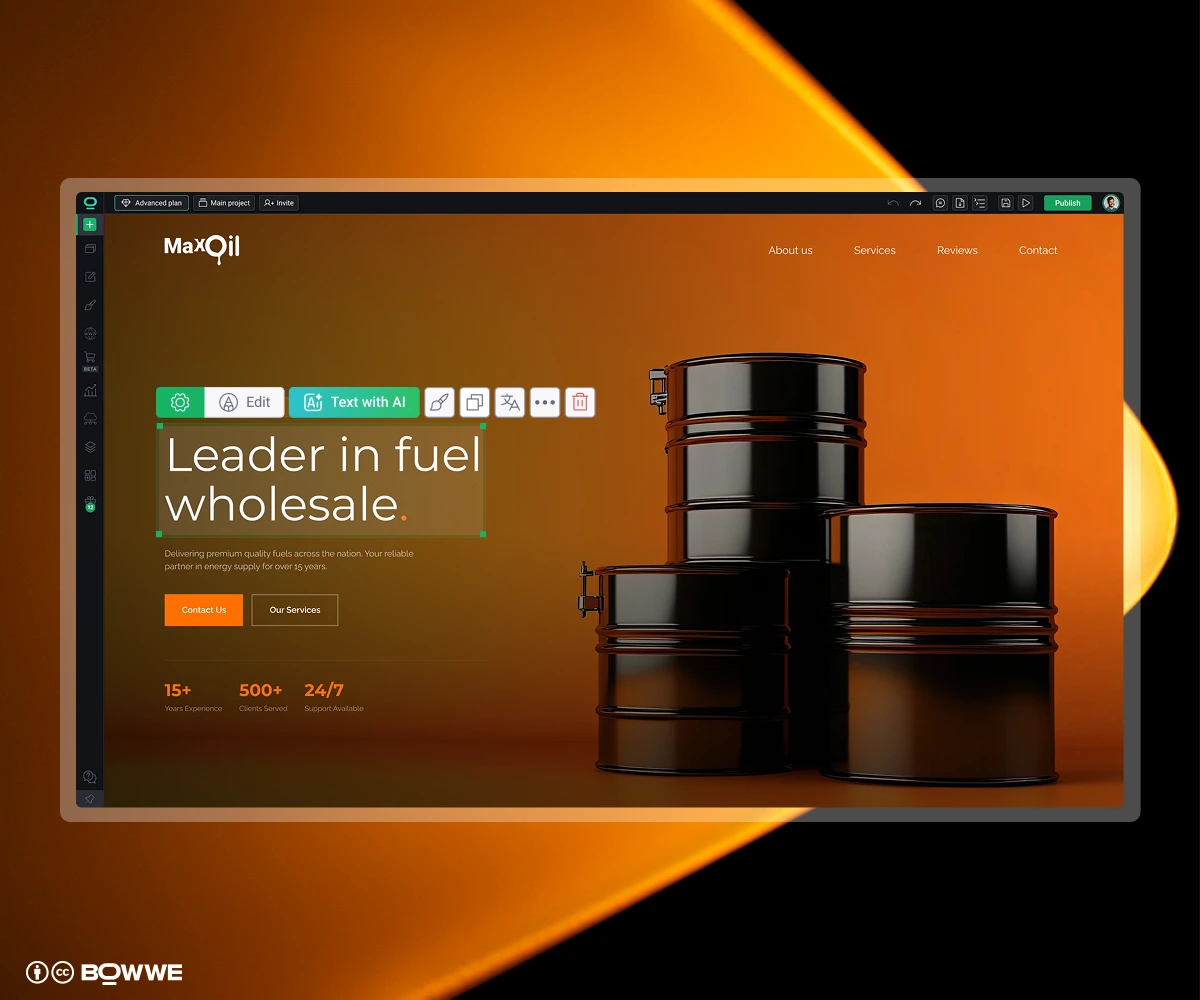
This is where starting from an industry website template helps. You don’t waste time inventing a structure from scratch. You start with what buyers expect to see, then you customize details.
3. Content creation: keep it clear, specific, and proof-heavy
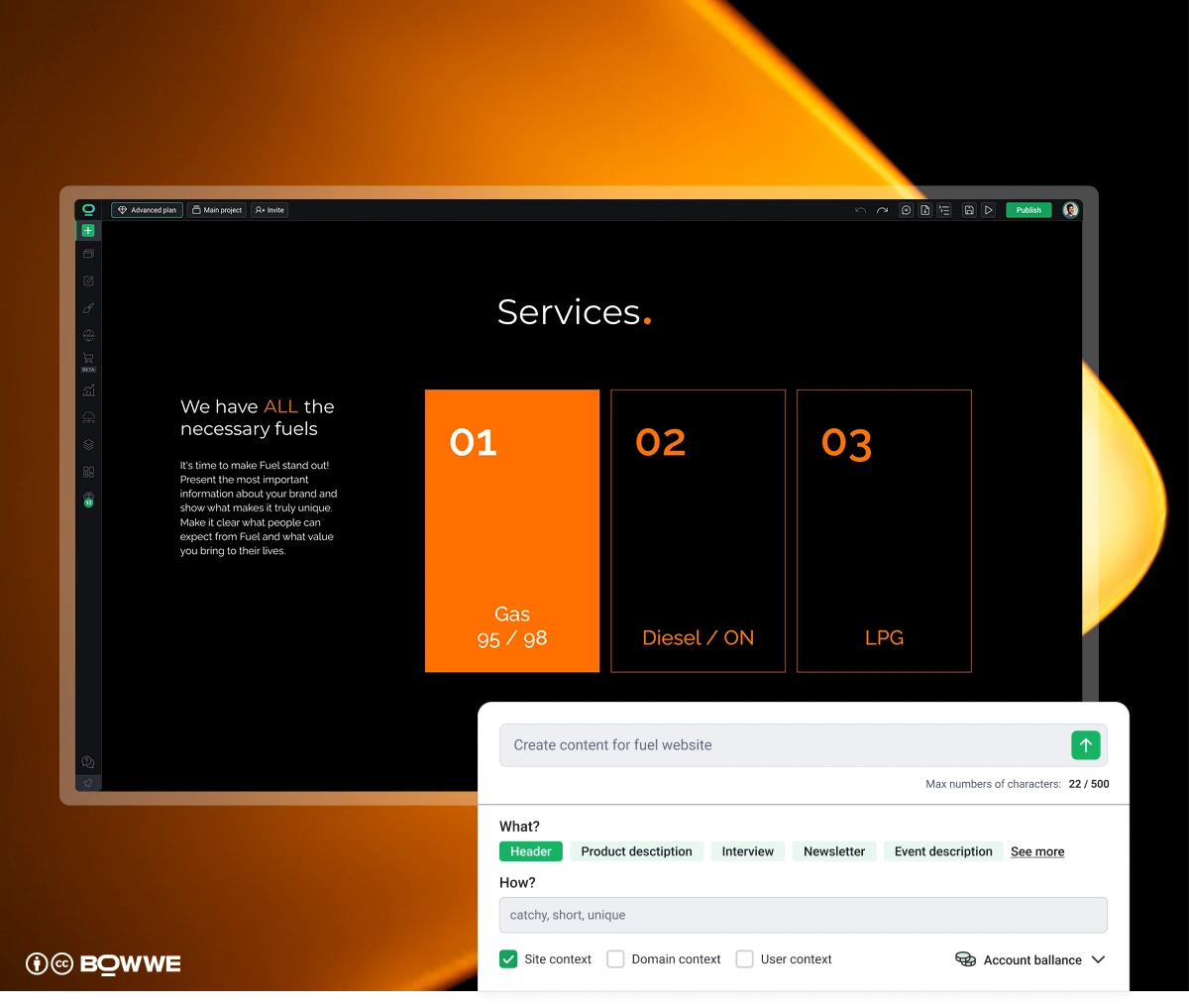
Your website should quickly explain:
- what you deliver,
- who it’s for,
- where you deliver,
- how ordering works,
- what makes you reliable.
The same service can be positioned differently depending on who’s reading. For example, people managing fleets care about predictability: stable pricing options, delivery windows, and what happens if plans change. Agricultural buyers care about seasonal availability, fuel quality, and safe on-site storage. Procurement teams care about documentation, reporting, and whether onboarding will be smooth.
That means your SEO pages should speak directly to those concerns, not just list “our services.”
4. Blog content: use it for long-tail keywords and trust
A few examples that tend to perform well in this industry:
- how bulk fuel pricing typically works (and what affects it)
- how to plan deliveries for peak season
- basic fuel storage safety checklists
- what supplier documents procurement usually needs
- how delivery scheduling prevents downtime
BOWWE also supports multilingual websites and blogs, which matters if you sell across regions or serve international customers.
5. On-page SEO essentials: titles, descriptions, URLs, images
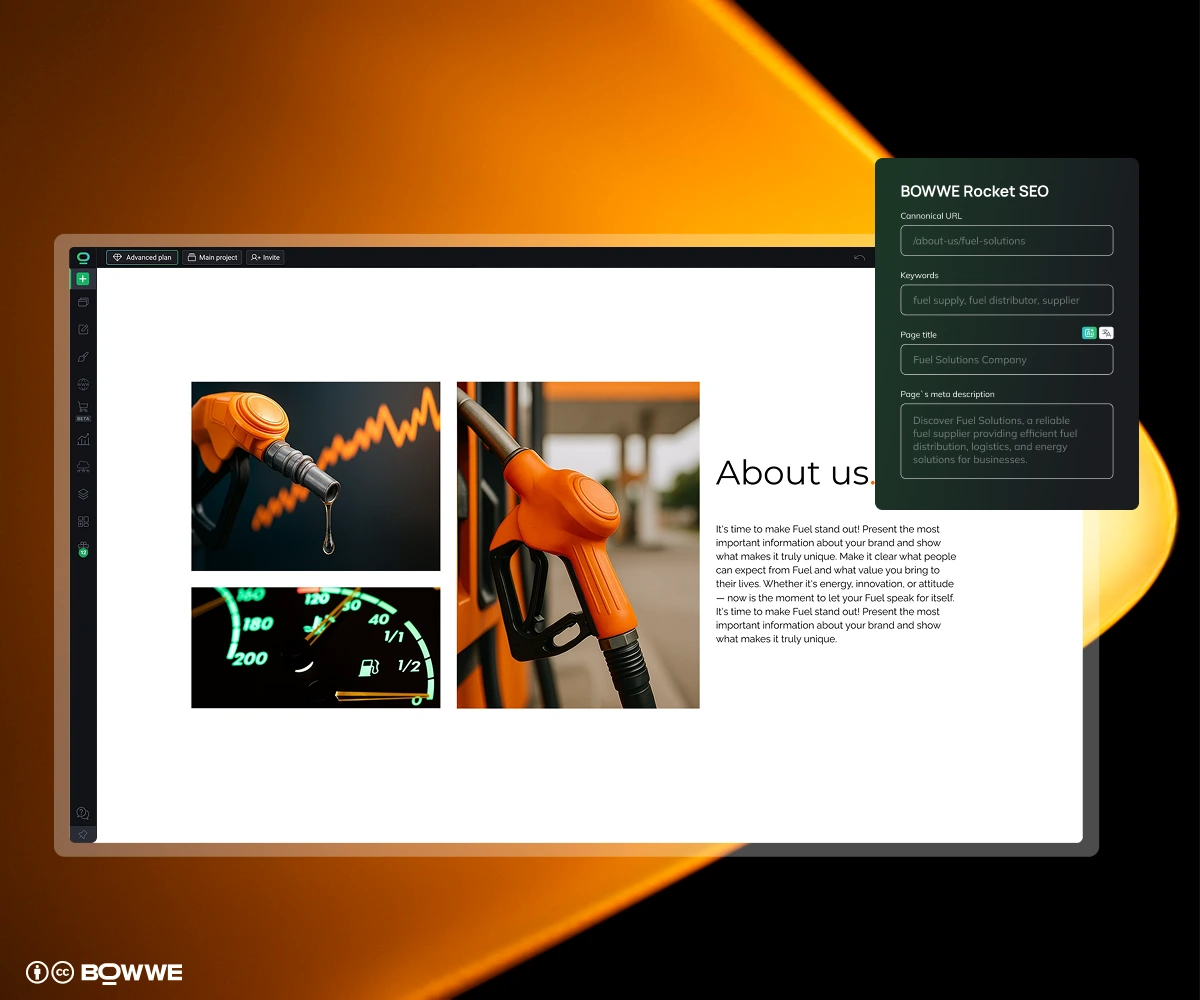
A meta title is the clickable headline that can appear in Google search results. It should include the main keyword and clearly describe the page, for example:
- Bulk Diesel Delivery in Texas | [Brand Name]
- Reliable bulk diesel delivery for fleets, farms, and commercial operations across Texas. Fast quotes and regional coverage.
- yoursite.com/bulk-diesel-delivery instead of yoursite.com/page?id=123
Image alt text is a short description added to an image. It helps search engines understand the image and improves accessibility. For example, instead of using alt text like "image1", write:
- fuel tanker delivering diesel to a commercial fleet yard
6. Structured data (Schema): help Google understand your site
For fuel & distribution websites, common useful schema types include:
LocalBusiness, FAQPage, and Review/Rating (where applicable).
7. Technical fundamentals: mobile, speed, SSL

Keep things fast and clean: compress images, avoid heavy homepage video, and use scannable layouts. SSL (HTTPS) is also non-negotiable – it’s a trust signal and a ranking factor.
8. Tools + indexing: measure and fix what matters
If a page isn’t indexed, it can’t rank. Submitting a sitemap and monitoring indexing isn’t optional – it’s part of the job.
Fuel & distribution SEO - Summary
- Build or improve core service pages (one page per service, one clear CTA).
- Add location/coverage pages for the regions you serve.
- Make trust signals obvious (documents, certifications, process, reviews).
- Publish practical blog content and link it to money pages.
- Clean up meta titles/descriptions, URLs, and image alt text.
- Make sure the site is fast, mobile-friendly, and secure.
- Track performance in Search Console and Analytics.
Do this consistently, and your website stops being a brochure and starts acting like a lead engine.
Create Your Website
SEO for fuel & distribution website - FAQ
How long does SEO take for fuel & distribution companies?
What pages matter most for B2B fuel SEO?
Is local SEO important in fuel distribution?
What makes a supplier website “procurement-friendly”?

Karol is an entrepreneur, e-commerce speaker among others, for the World Bank, and founder of 3 startups, as part of which he has advised several hundred companies. He was also responsible for projects of the largest financial institutions in Europe, with the smallest project being worth over €50 million.
He has two master's degrees, one in Computer Science and the other in Marketing Management, obtained during his studies in Poland and Portugal. He gained experience in Silicon Valley and while running companies in many countries, including Poland, Portugal, the United States, and Great Britain. For over ten years, he has been helping startups, financial institutions, small and medium-sized enterprises to improve their functioning through digitization.