
I’ve spent a lot of time reviewing fuel & distribution websites and mapping what actually helps win B2B deals (fleet owners, procurement, farms, construction). The pattern is profitable: If your site makes it easy to confirm coverage + reliability + compliance + process, you get quotes. If it’s vague or messy, you get ghosted.
Below are the 9 features I’d add to a fuel supplier website (or fuel distribution website) right now if you want more B2B contracts.
⚡TL;DR:
In this article, I cover the 9 website features that help fuel suppliers win more B2B deals:
- service pages built around buyer search intent
- a compliance and documents hub
- clear coverage information and a map
- a page explaining your B2B process
- trust proof based on real operational outcomes
- a structured RFQ flow instead of a generic contact form
- a blog that reduces buyer anxiety and supports SEO
- chat or a fast-answers layer
- analytics and SEO fundamentals
If your site gets these basics right, it stops acting like a brochure and starts helping you win quotes and contracts.
Create Your Website
9 website features fuel & distribution companies should add right now
1. Service pages built like buyers search, not like you organize internally
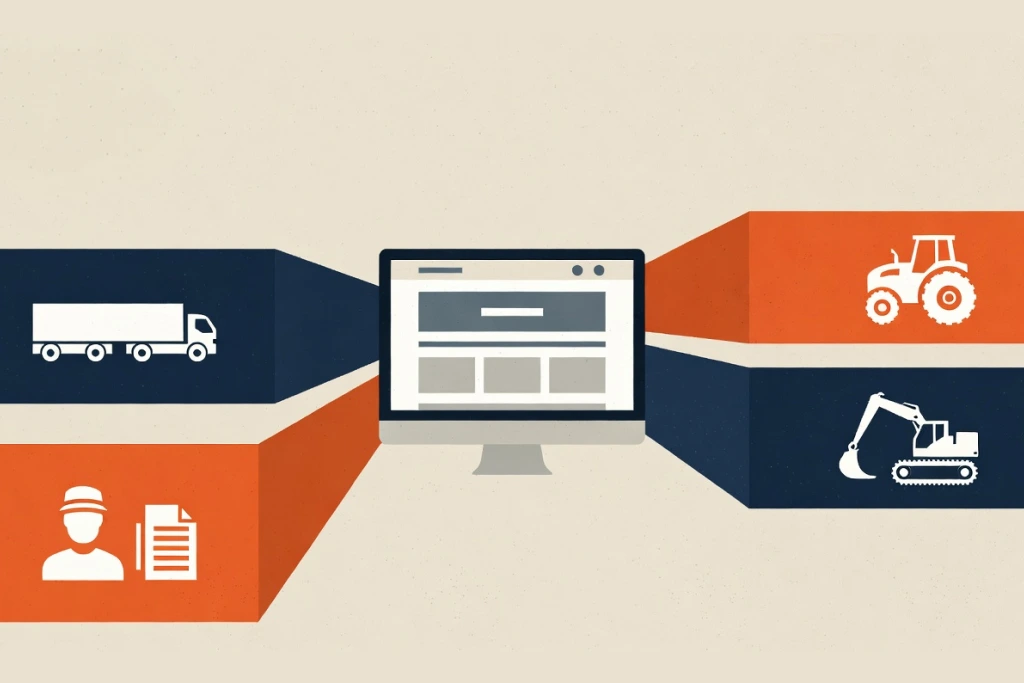
They search:
- bulk diesel delivery
- wholesale fuel supplier in a region
- fleet fueling contracts
- heating oil delivery
- LPG supply
- on-site fueling for job sites
Each major service should have its own page, with one clear CTA. This matters for conversions, and it matters for SEO.
When someone lands on “Bulk diesel delivery,” they should not have to scroll through your mission statement to find ordering details. Give them what they need to decide: what you deliver, where, how fast, how ordering works, and what proof you provide.
2. A compliance & documents hub that procurement can use without calling you
Procurement people don’t want to email you asking for SDS files, certificates, and specs. They want to click once, download, and move forward.
When your site hides documentation, buyers assume one of two things:
- you don’t have it, or
- it will be painful to get it during onboarding
Your documents hub should be obvious and clean. Keep it on its own page (and also link it from your B2B section).
What belongs there?
- SDS / safety docs
- product specs by fuel type
- quality certificates
- policies relevant to your market (environmental, transport, storage, etc.)
- ESG / emissions-related info only if it’s real and specific (procurement hates green fog)
The key isn’t having 40 PDFs. The key is making documents easy to find and easy to use, so buyers can move faster without endless emails and follow-up calls. Clear file names, visible update dates, and a logical structure help speed up onboarding, approval, and ordering.
3. Coverage clarity + a map that reduces friction immediately
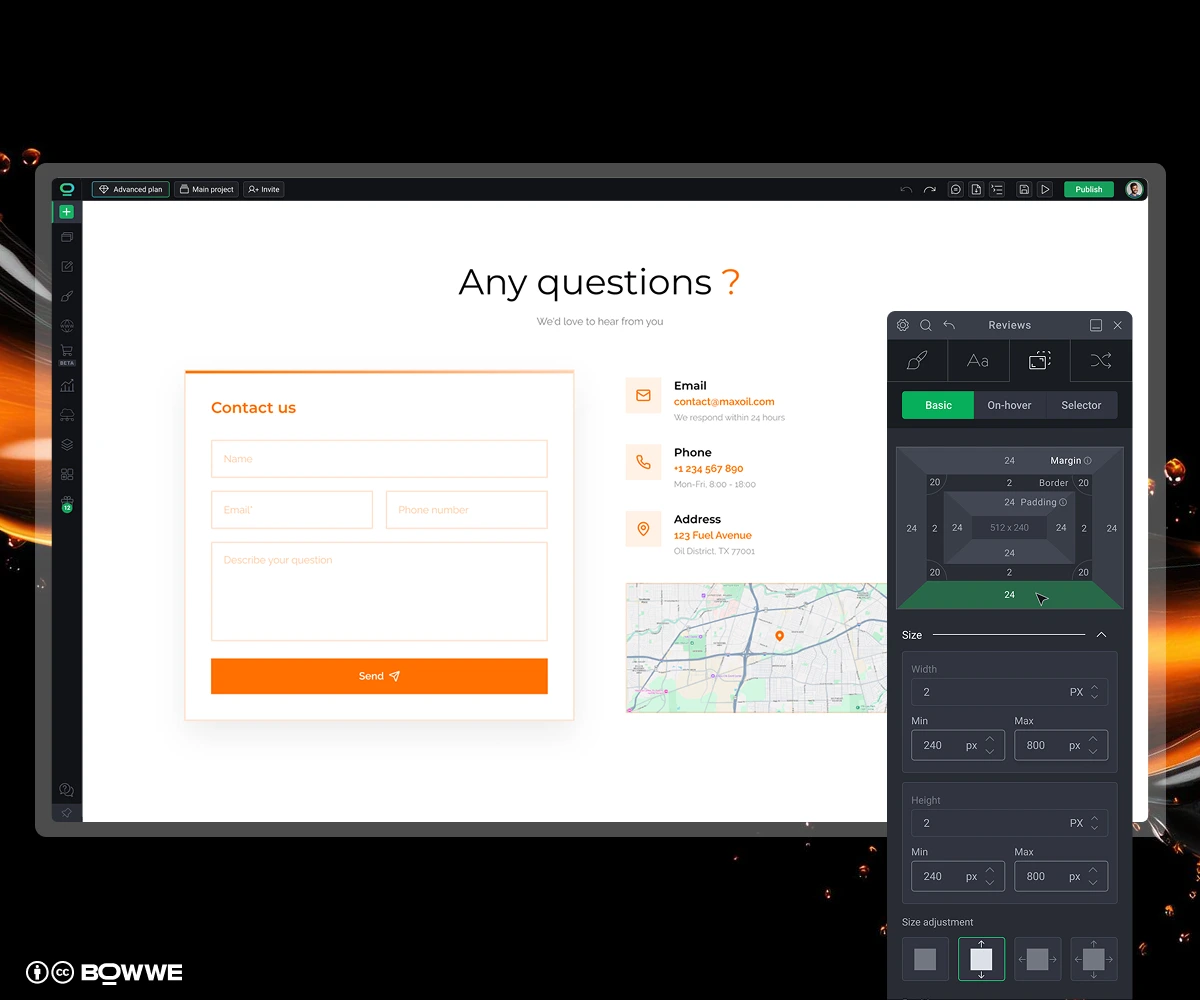
Coverage pages and locator tools are simple, but they make you look 10x more “real.”
If you run stations or depots, a locator should let people find what they need in seconds. If you deliver fuel, your coverage section should answer:
- Where do you deliver?
- How fast can you deliver (typical windows)?
- What affects delivery time (seasonality, volume, region)?
This is also where your fuel distribution website can quietly do sales work: a buyer might not request a quote if they aren’t sure you serve them. A clear coverage section removes that doubt.
4. A page that clearly explains your B2B process
A B2B page should feel like: “Here’s how we work with businesses, here’s how onboarding goes, here’s how we keep things predictable.”
If you only do one thing here, do this: write the process down. Procurement trusts suppliers who show steps.
A simple “how onboarding works” block is powerful because it reduces uncertainty. Example: request → requirements → pricing model → documents → schedule → reporting
You don’t need to overexplain. You just need to prove you’ve got a repeatable system.
- For the procurement director, the B2B zone should emphasize: documentation, reporting, compliance, and contract clarity.
- For the fleet owner, it should emphasize: stability, delivery reliability, and what happens when plans change.
5. Trust proof that sounds like fuel reality
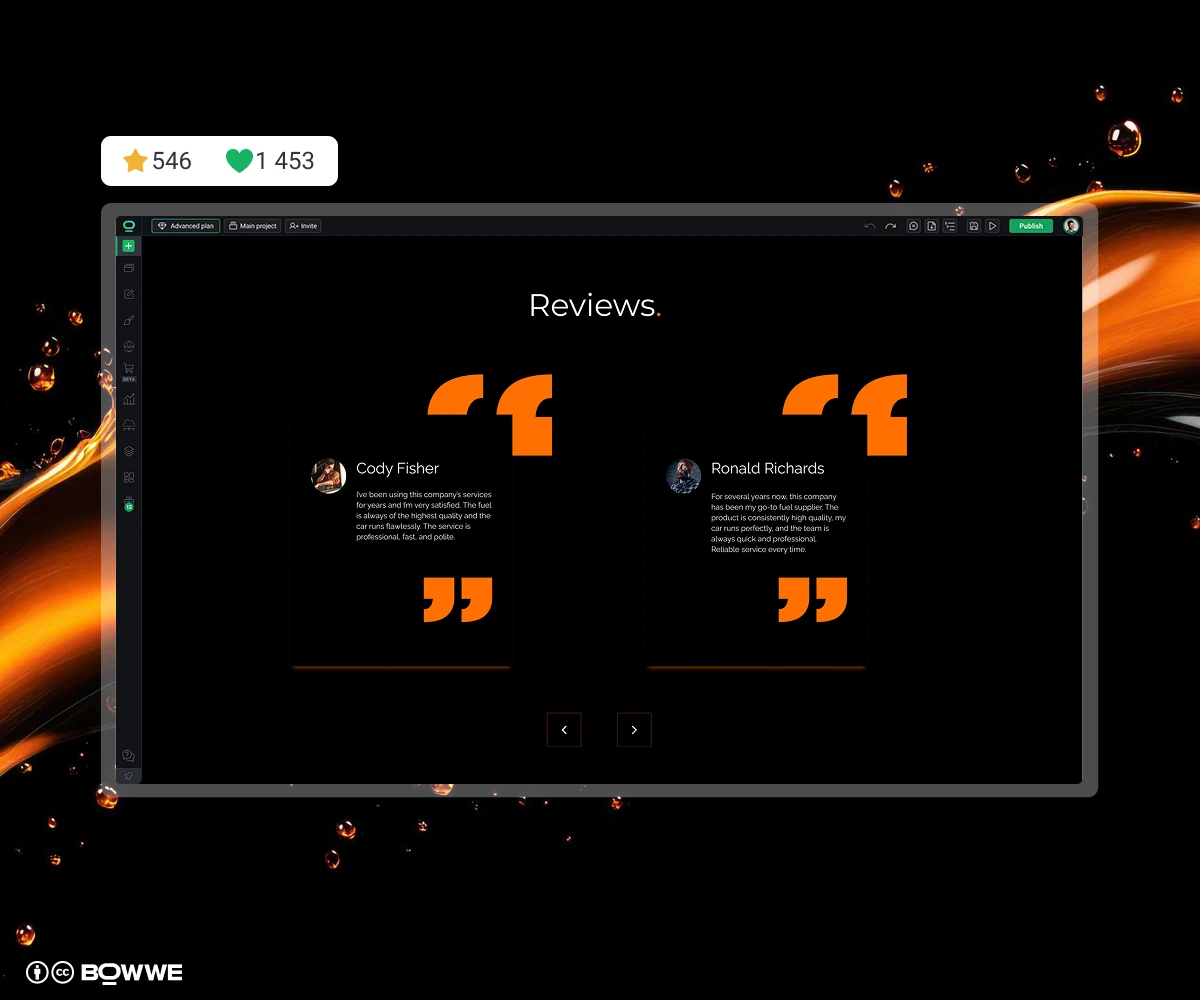
Nobody cares that you’re “professional.” They care that:
- deliveries show up on time,
- fuel quality is consistent,
- support responds fast,
- and you handle changes without drama.
Put reviews where they influence action: near your “Request a Quote” CTA, on the B2B page, and on key service pages.
Collect testimonials right after a smooth delivery or an important contract milestone, because that’s when feedback is most specific. Clients are more likely to mention what actually matters to future buyers: timing, delivery reliability, flexibility, communication, and documentation. Keep the format simple and operational – who they are (fleet / farm / procurement), what happened (on-time deliveries, flexible scheduling, clear docs), and what improved (less downtime, smoother planning, fewer disruptions).
6. “Request a Quote” flow (not a generic contact form)
A proper RFQ (Request a Quote) flow does the opposite: it makes the buyer feel like you’ve handled hundreds of contracts like theirs, and that your sales process is organized.
Here’s a simple example.
- Arthur (fleet owner) lands on your site because his fuel costs are unpredictable. He’s not looking for your history. He wants to know if you can offer stable pricing models, reliable deliveries, and flexibility on volume. If the first “quote” step is a tiny contact form with “message,” he assumes your operation is just as vague.
- Anna (procurement director) is even tougher. She wants a supplier she can defend internally. A messy quote process signals messy reporting, messy documentation, and slow onboarding.
Keep the RFQ form short, but structured. The only time I’d use bullets here is because the field list matters:
- fuel type (diesel / gasoline / heating oil / LPG)
- estimated volume (one-time + monthly)
- location(s) / delivery region
- frequency (scheduled / on-demand)
- start date + deadline
- company name + contact
7. A blog that reduces buyer anxiety (and quietly wins SEO)
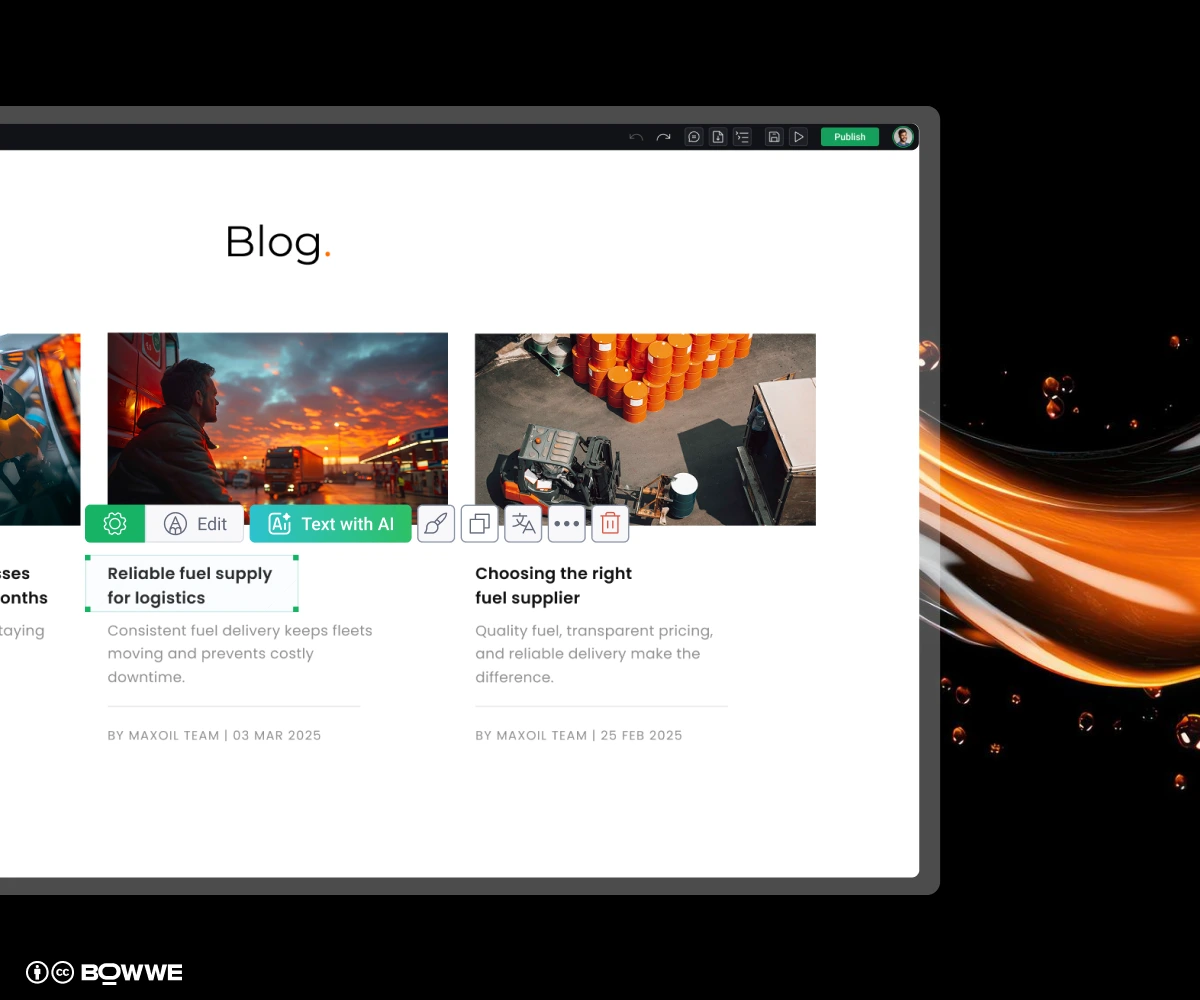
In fuel, buyers worry about risk, so your content should answer practical questions in a way that makes your process look clear, reliable, and easy to work with.
Examples that match your personas:
- for fleet owners: how pricing models work, how to prevent downtime, how delivery scheduling protects operations
- for procurement: what documents they’ll need, what reporting to expect, how onboarding typically looks
- for seasonal buyers (agriculture): how to plan volume, storage basics, quality red flags
You don’t need to publish constantly. One genuinely helpful post per month can do serious work over time, especially if it links to your service pages and RFQ flow.
8. Chat or a smart “fast answers” layer
It should answer:
- minimum order / lead time
- coverage questions
- documents availability
- “I need a quote” → direct link to the RFQ flow
9. Analytics + SEO fundamentals that prevent invisible failure
At minimum, you want:
- Google Analytics 4 (so you know what people do)
- Google Search Console (so you know what people search)
- one clear conversion you measure (RFQ submit, call click, proposal request)
- each page targets one main keyword naturally (fuel supplier website, fuel distribution website, bulk fuel delivery, fleet fueling)
- page titles + meta descriptions are short and clear (no keyword soup)
- pages load fast on mobile
This is exactly where templates help. When the structure is already SEO-friendly, you’re not fighting your own website later.
Fuel supplier website - summary
- It makes buyers feel safe.
- It makes verification easy.
- It makes requesting a quote effortless.
That’s it.
If your site clearly shows coverage, process, proof, compliance docs, and a clean RFQ flow, you stop looking like a commodity vendor and start looking like a “safe choice.”
Create Your Website
Features for fuel & distribution website - FAQ
Do fuel suppliers really need a website to win B2B contracts?
What’s the #1 feature that increases fuel quote requests?
What should a fuel RFQ form include?
What compliance documents should be on a fuel supplier website?
What’s the easiest SEO win for fuel suppliers?
How do I make my website “procurement-friendly”?
Can I build a fuel supplier website without hiring an agency?

Karol is an entrepreneur, e-commerce speaker among others, for the World Bank, and founder of 3 startups, as part of which he has advised several hundred companies. He was also responsible for projects of the largest financial institutions in Europe, with the smallest project being worth over €50 million.
He has two master's degrees, one in Computer Science and the other in Marketing Management, obtained during his studies in Poland and Portugal. He gained experience in Silicon Valley and while running companies in many countries, including Poland, Portugal, the United States, and Great Britain. For over ten years, he has been helping startups, financial institutions, small and medium-sized enterprises to improve their functioning through digitization.