

That’s right, and if you’re not showing up on Google, you’re basically invisible to new clients. In this guide, I’ll break down simple, SEO strategies for nutritionists and dietitians who want to fill their calendar (not just get more web traffic).
Ready to start ranking and booking more sessions?
⚡TL;DR:
- Do keyword research: Find out what people really type into Google (like “meal plans for athletes Austin” or “sports dietitian near me”). Focus on a mix of broad, specific, and local keywords.
- Build strong, useful content: Create clear service pages, an about page, and a simple blog answering real client questions (“How to eat for gut health?” “Is a vegan diet healthy for runners?”).
- Polish your on-page SEO: Use catchy meta titles and descriptions, add ALT text to images, and use short, keyword-rich URLs so Google (and people) understand your site.
- Local SEO is key: Set up your Google Business Profile, add your city to important pages, get listed in wellness directories, and collect client reviews to build trust and visibility.
- Don’t forget the tech: Make your website mobile-friendly, fast-loading, and secure (SSL). With BOWWE, all the hard stuff (site speed, mobile design, SSL) is handled for you automatically.
- Build authority: Get links from local gyms, wellness blogs, or roundups like “Best Nutritionists in [City].” Link your own blog posts and service pages together.
- Measure & improve: Use free tools (Google Analytics, Search Console, BOWWE’s statistics module) to see what’s working, then double down on pages and keywords that bring in real bookings.
What is SEO for nutritionists & dietitians?
Start Now - It’s Free
Why is SEO important for nutrition experts?
Great SEO makes sure it’s your name they see first. That means:
- More website visits from people ready to book a visit.
- Less money wasted on ads nobody clicks.
- Instant credibility (clients trust top search results!).
- Long-term growth, even when you take a vacation.
How to prepare SEO for nutritionists & dietitians: Step-by-step
1. Do a personalized nutrition keyword search
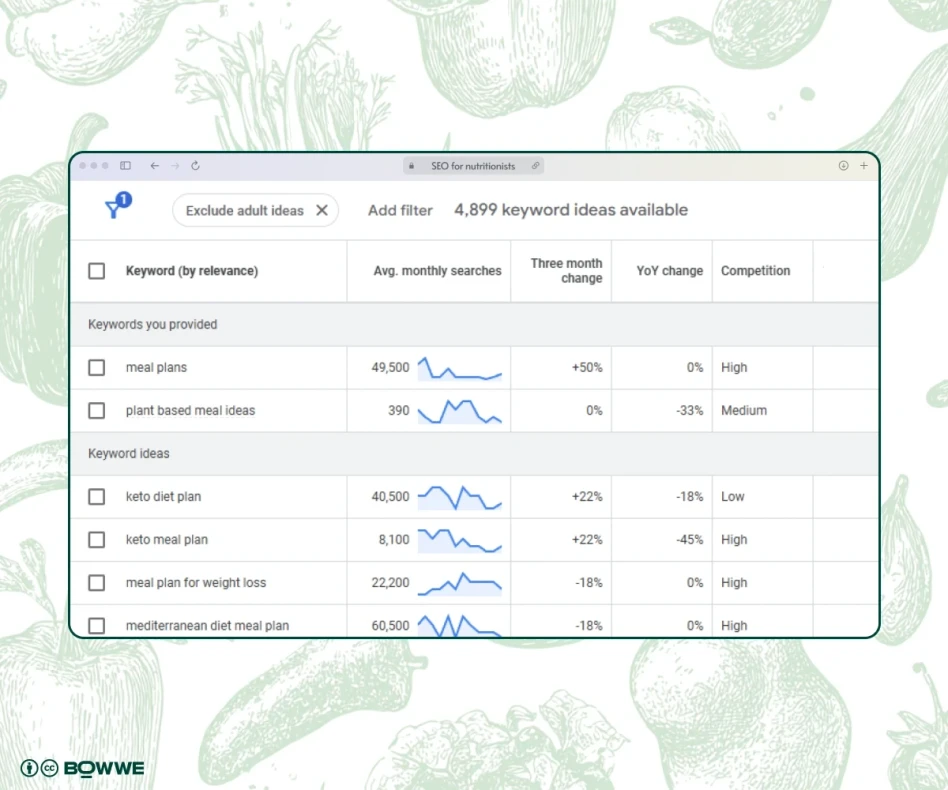
- “nutritionist for athletes near me”
- “plant-based meal plans online”
- “dietitian covered by insurance [city]”
- “pediatric nutrition advice”
How to find the best keywords:
- Use Ahrefs, Semrush, or Google’s Keyword Planner (free!).
- Look for keywords with high search volume, low competition, and high intent.
- Don’t forget location-specific terms (“nutritionist in Austin”).
1.1. Primary keywords
Nutrition primary keywords list:
- nutritionist
- dietitian
- meal plans
- registered dietitian
- weight loss nutritionist
1.2. Long-tail keywords
Nutrition long-tail keywords list:
- meal plan for extreme runners
- virtual nutritionist appointments for seniors
- best dietitian for gut health issues
- vegan meal plan for busy professionals
- family nutrition counseling for picky eaters
1.3. Location-specific keywords
Nutrition location-specific keywords list:
- nutritionist in Austin TX
- dietitian near me
- Dallas sports nutritionist
- Houston pediatric nutritionist
- online nutrition coach Chicago
2. Create compelling nutrition content
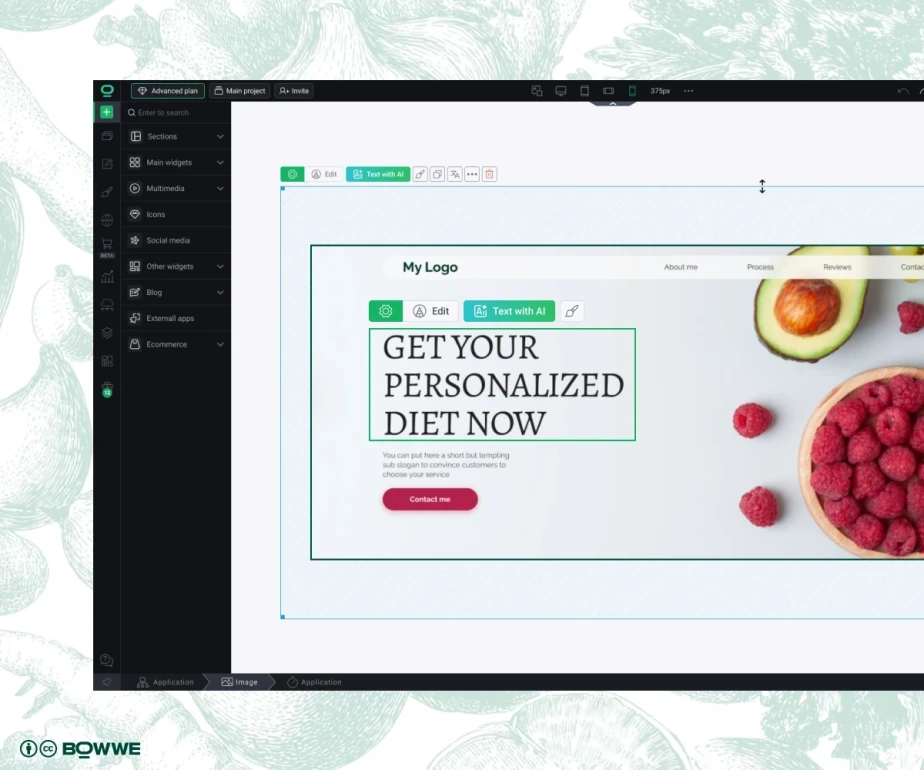
- Your services (“Weight Loss Coaching,” “Sports Nutrition Consults”)
- Your story (“About Me”)
- Answers to common questions (blog posts, FAQs)
2.1. Main page
Example:
- Headline: “Feel Your Best—Book Your First Nutrition Session In Minutes”
- Body: “As a registered dietitian, I’ll help you reach your health goals with custom plans that work in real life.”
2.2. Service pages
2.3. Blog
3. Polish your on-page SEO
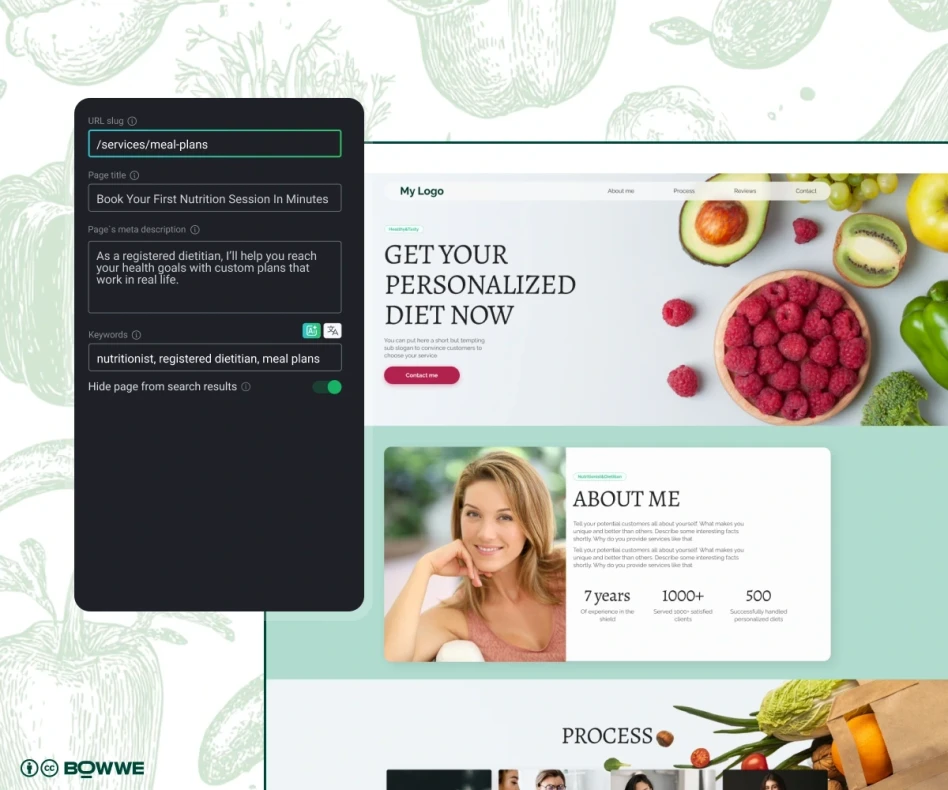
4.1. Meta title & meta description
- Meta Title: Keep it under 60 characters, add in your main keyword (like “nutritionist” or “dietitian”), and make it sound inviting. Example: Best Nutritionist in Austin | Book Your Session
- Meta Description: This is your “free ad” in Google. Stay under 160 characters, mention what you offer, and add a call to action. Example: Personalized meal plans, virtual consults, and proven results. Book with a top-rated Austin dietitian today!
3.2. Image alternative descriptions
- Use simple, clear sentences to describe your image, do use descriptions like “IMG_2.jpg” or “photo1.” Example: Before and after healthy meal plan for weight loss – Dallas nutrition client
3.3. SEO-friendly URLs
- Always use short, keyword-rich addresses like: /services/meal-plans
- Avoid messy links: /page?id=32
4. Build local SEO
- Set up your Google Business Profile: Claim your profile and fill it out with accurate info: address, phone number, hours, and services. This helps you show up in Google Maps and “near me” searches.
- Add your location to key site pages: Add your city or neighborhood into your homepage, service pages, and even your blog. Example: “Personalized nutrition plans in [Your City]”.
- Get listed in local directories: Look for online spots where local clients find wellness help, like wellness blogs, fitness studio websites, health clinic directories, and local business listings. These links boost your trust in Google’s eyes and send you real traffic.
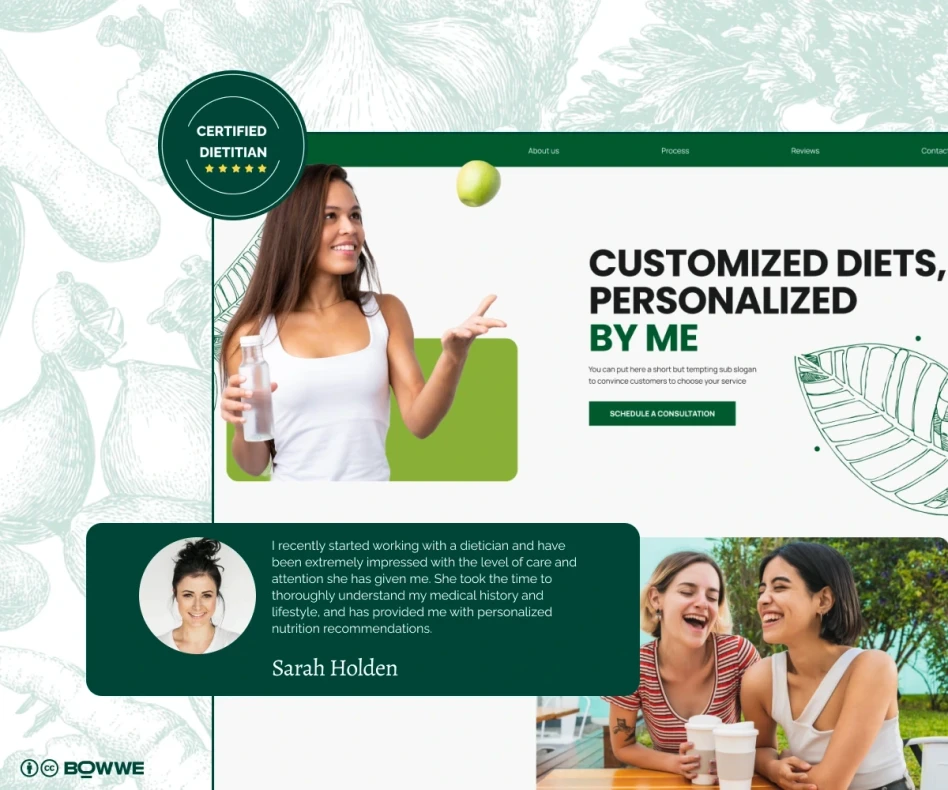
- Ask happy clients for Google reviews (and show them off!): After a successful session, ask for a quick review. Good reviews on Google not only boost your rankings, they also make you look trustworthy at a glance. Feature your best customer testimonials right on your website (with permission), especially on your homepage and booking page.
5. Prepare structure & speed
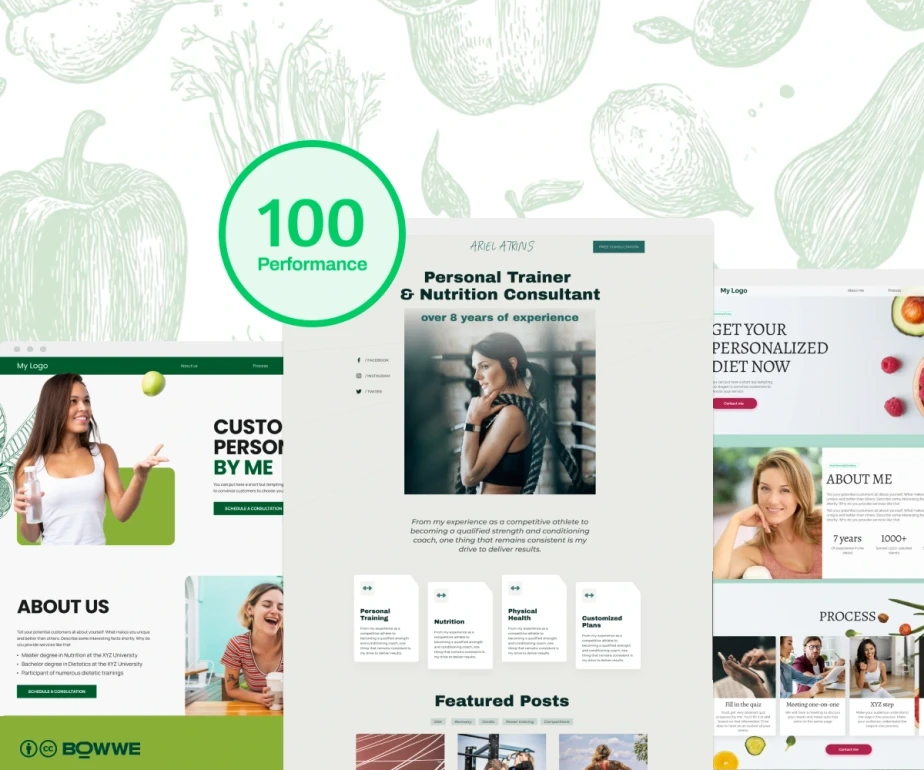
- Mobile First: 60% of smartphone users have contacted a business directly from search results. If your site doesn’t look good or work smoothly on a phone, you’re missing out on real clients. Make sure your website resizes and loads perfectly on any device (BOWWE’s templates do this for you automatically).
- SSL: Security matters. Google favors websites that are secure (the ones with “https://” in the address bar). Plus, it shows clients you take privacy seriously.
- Fast Loading: Slow sites turn people off fast. Keep your images under 100kB, skip heavy animations, and use a website builder like BOWWE that handles speed for you behind the scenes.
6. Build your authority with link building
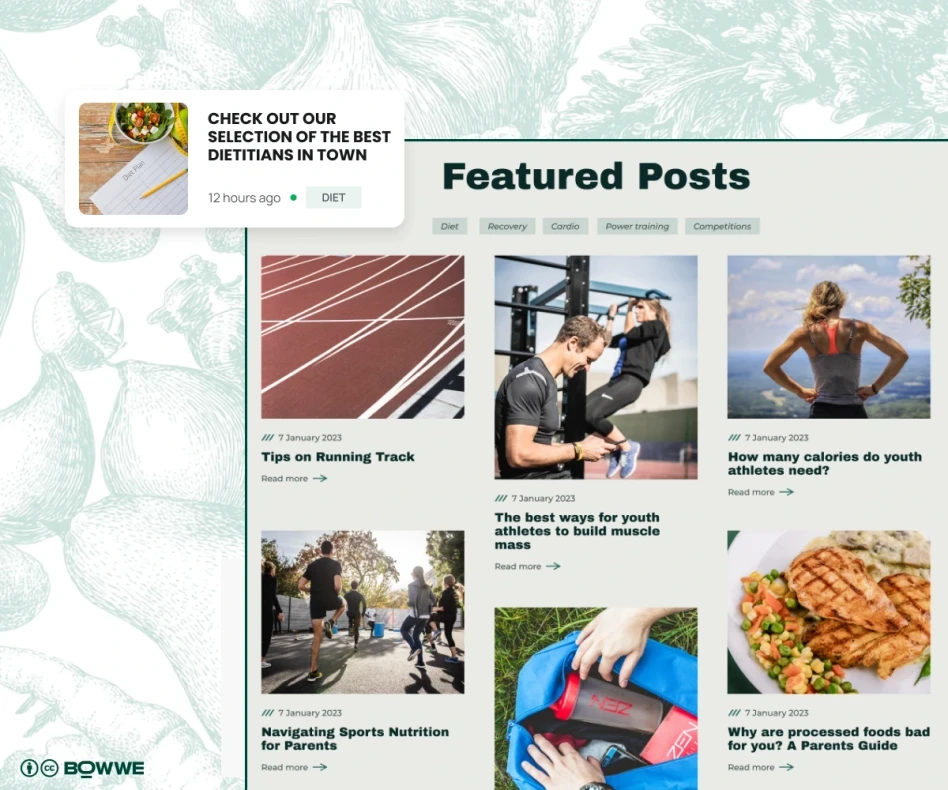
- Guest post for wellness blogs: Write a simple, helpful article (like “Top 5 Mistakes People Make With Meal Prep”) for a local health, fitness, or mom blog. In your author bio, link back to your site. It’s great exposure and an easy link.
- Trade links with local gyms, doctors, fitness instructors: Know a personal trainer or yoga studio? Offer to feature their services on your “Recommended Partners” page, and ask if they’ll do the same. Doctors, therapists, and wellness coaches are also good partners.
- Get listed in “Best Nutritionists in [city]” roundups: Search for lists like “Top Dietitians in Austin” or “Best Nutrition Coaches [Your City]” and reach out. These lists are usually happy to add more local experts (especially if you have good reviews or a professional site).
- Internal links: Don’t forget to link your own pages together. If you write a blog on “Healthy Eating for Kids,” link it to your meal planning service page. Connecting related posts helps Google crawl your site and keeps visitors exploring longer, which boosts your ranking.
7. Measure your results & improve
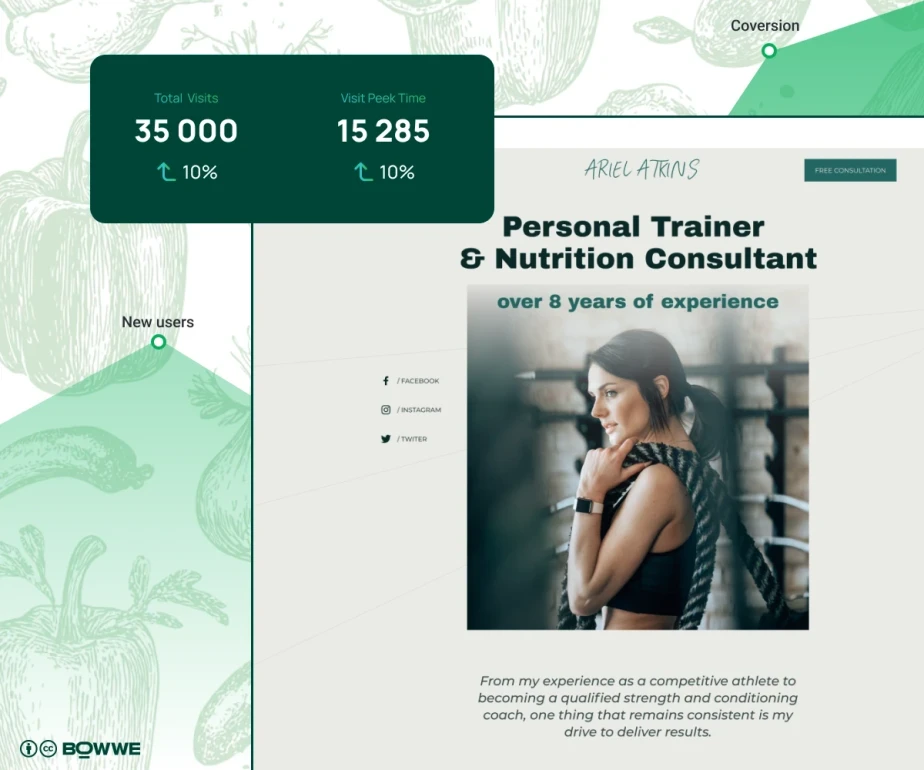
- Set up Google Analytics and Google Search Console (free!): These give you real numbers: how many people visit your site, which pages are most popular, what keywords people used to find you, where your traffic comes from (Google, Instagram, local blogs, etc.).
- Track what brings in real clients: Which pages get the most bookings or contact form submissions? Double down on those topics and keep adding similar content.
- Adjust based on the data: If you notice lots of people are finding you by searching “PCOS meal plans [city],” write more content about women’s health and PCOS. If a certain blog post gets traffic but nobody books, try adding a stronger call-to-action (“Book a free consultation now”).
- Keep it simple: Check your stats once a month. Update keywords, swap out headlines, and refresh old content based on what’s working best.
SEO for nutritionists & dietitians - Summary
- Find 5–10 high-intent keywords: Focus on what real clients are searching (“meal plans for athletes Austin”, “weight loss dietitian near me”, “virtual nutritionist Texas”). Use Google, Ahrefs, or just autocomplete to spot the best phrases.
- Build out service pages & a simple blog: Create a page for every main service (e.g., meal plans, sports nutrition, gut health). Add a blog, even 3-5 posts on topics your clients ask about can help boost your site in search results.
- Optimize meta titles, descriptions, and image alt text: Make every page easy for Google (and clients) to find. Use clear, keyword-rich titles and descriptions. Add descriptive ALT text to your images for that extra SEO boost.
- Get listed in Google Business & local directories: Claim your Google Business Profile, keep info up to date, and ask happy clients for reviews. List your site on health, wellness, and local business directories to show up where people look for nutrition experts.
- Earn a few links from trusted local sites: Reach out to local wellness blogs, gyms, clinics, and partner businesses for simple link swaps or guest posts. Even just a few good links can make a big difference.
- Check your rankings every month: Track how your site is moving up in Google. Use free tools like Google Analytics and Search Console. See what pages drive the most traffic and bookings and double down on what works.
With a nutrition website built on BOWWE, you get an SEO-ready site - no coding, no hassle, just more clients. Start free today!
Start Now - It’s Free
Nutritionist & dietitian SEO - FAQ
How do I get my nutritionist website to show up on Google?
What keywords should a dietitian use for SEO?
Is blogging important for nutritionists and dietitians?
How important are online reviews for a nutritionist?
What’s the best way to get backlinks for a nutritionist site?

Karol is a serial entrepreneur, e-commerce speaker among others, for the World Bank, and founder of 3 startups, as part of which he has advised several hundred companies. He was also responsible for projects of the largest financial institutions in Europe, with the smallest project being worth over €50 million.
He has two master's degrees, one in Computer Science and the other in Marketing Management, obtained during his studies in Poland and Portugal. He gained experience in Silicon Valley and while running companies in many countries, including Poland, Portugal, the United States, and Great Britain. For over ten years, he has been helping startups, financial institutions, small and medium-sized enterprises to improve their functioning through digitization.