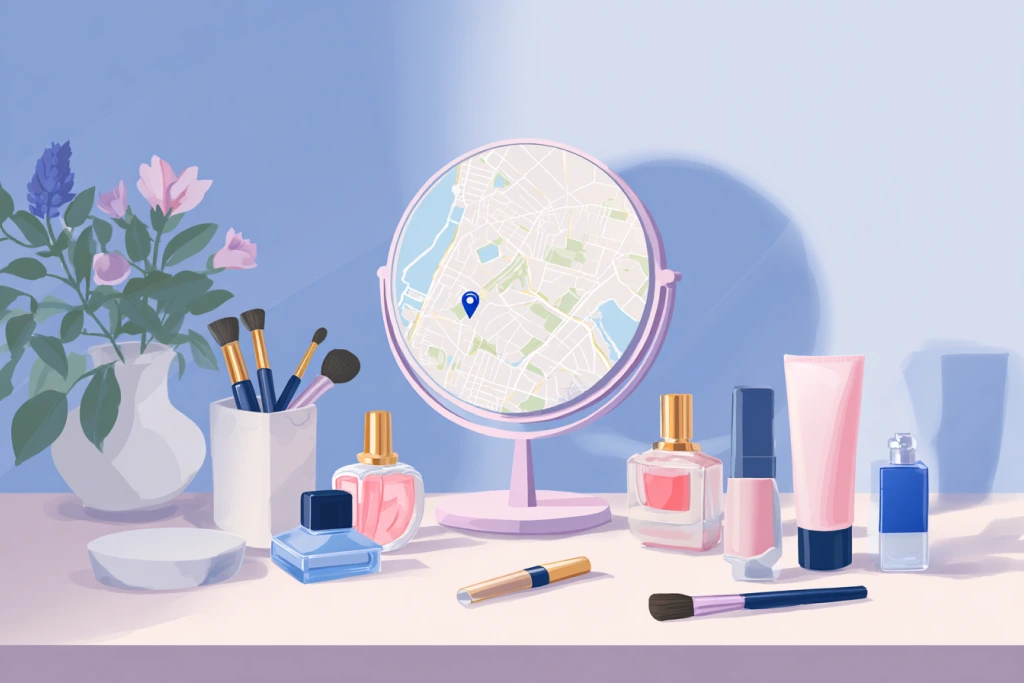
- rank in both the map-pack and organic results (without paying for ads),
- pick revenue-ready keywords,
- build a lightning-fast site that search engines loves to show,
- expand your search results with copy-paste schema specifically for beauty salons SEO!
When bookings, not impressions, pay the bills, SEO is the only marketing channel that gets cheaper the longer you run it. Let’s learn how to use it.
Start Free!
What Is SEO for beauty salons?
In short: help search engines see your salon clearly, load it quickly, and match it perfectly to what local clients want.
Why is SEO for beauty salons important?
It wins the “lead-versus-cost” war
It scales bookings, not just traffic
Local signals dominate mobile search
It future-proofs you against rising ad costs
The only beauty salon SEO strategy you need to book more appointments
Sneak peek:
In the sections that follow you’ll get:
- Instruction for keywords research for beauty salons,
- structure for content creation for your beauty website,
- fail-proof email template for link building strategy,
- best method to set perfect meta titles & descriptions,
- ...and more!
1. Keyword research - Find what your dream clients actually search
Step
What to do
Result in 5 minutes
1. Start from base
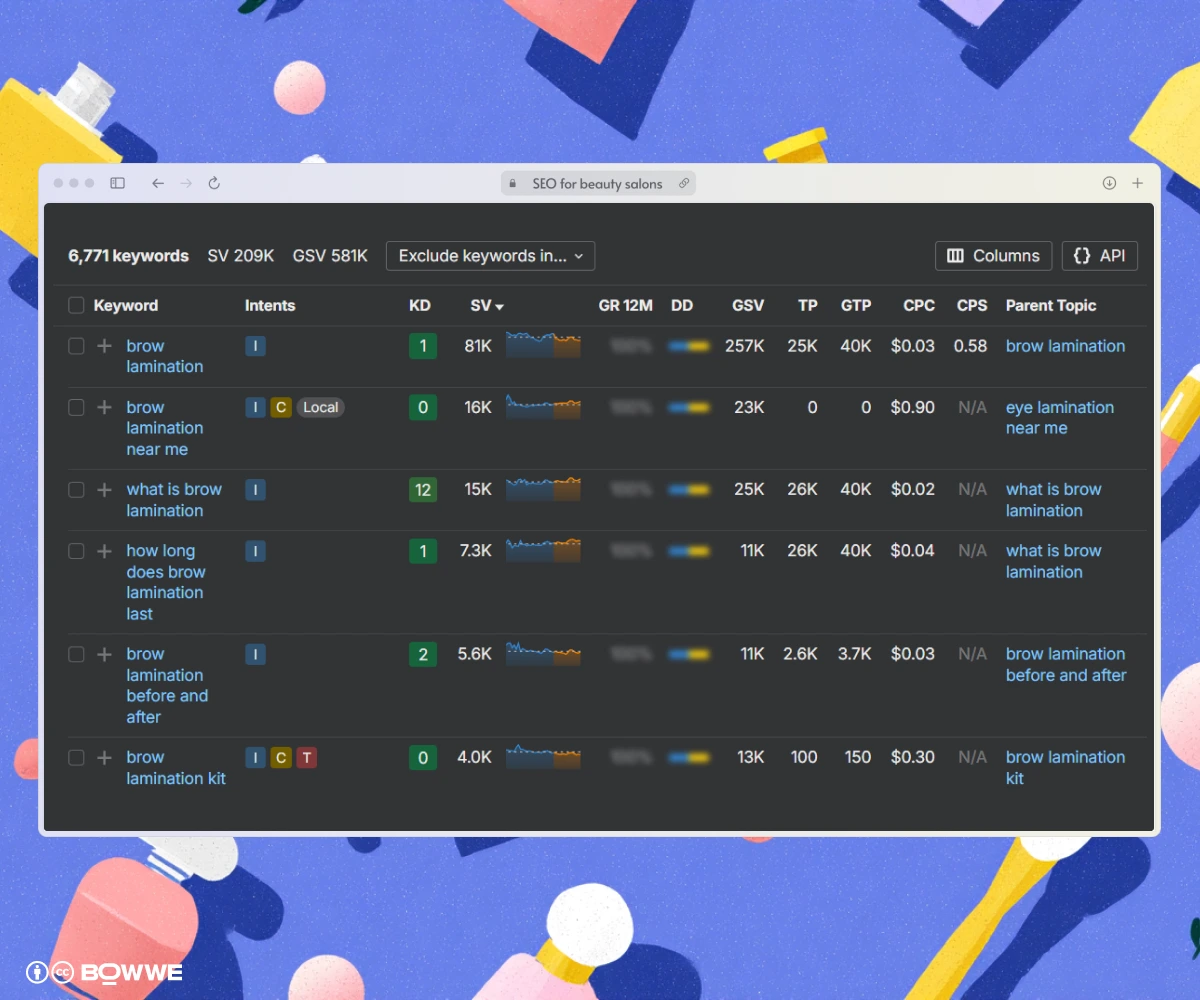
Add 3–4 obvious terms (like lash lift, brow lamination, hydrafacial) into an SEO tool like Ahrefs, Semrush, or Google Ads’ free Keyword Planner. Then check the results and look for related keywords you can use on your beauty salon website or when posting on other platforms.
Raw list of 1 000+ phrases, ordered by volume/search.
2. Organize keywords
Keep keywords that score ≥10 searches/mo, KD ≤ 30, and show “Local Pack” in SERP features.
40–60 phrases you can realistically own.
3. Run intent check
Ask “Would a walk-in pay me for this right now?” If the answer’s yes - it stays.
A laser-focused set of money keywords.
1.1. Primary keywords
- “brow lamination”
- “lash lift”
- “facial treatment”
They’re competitive, but Google still needs to see them in your H1, title tag, and a couple of body paragraphs. Think of them as the sign outside your salon door.
1.2. Long-tail keywords
- “vegan lash lift kit safe for sensitive eyes”
- “best brow mapping artist Chicago”
- “hydrafacial aftercare tips dermatologist approved”
Add these into FAQs, blog headlines, and even ALT text on your before/after photos. They’re the easiest way to sneak into Google’s AI Overview box.
1.3. Location-specific keywords
- “lash lift near Fishtown Philadelphia”
- “brazilian wax studio 78704”
- “organic facial spa Upper West Side”
Tack these onto service-page H2s and your Google Business Profile description. Matching NAP (business name, address, and phone number) + keyword wins you the map-pack.
2. Content creation - Create content that sell while you sleep
Content type
Goal
Keyword mix
Website copy
Set the vibe and push visitors to book
Primary + one local modifier
Product pages
Rank for retail items and gift cards
Product name + “buy” + city
Service pages
Turn searchers into clients
Primary + location + price snippet
Blog
Answer questions and boost trust
Long-tail + “how/why/when”
2.1. Website copy
- Start strong with a benefit-focused headline: “Wake up camera-ready: Lash lifts in Austin”.
- Add in 1–2 primary keywords for every ~200 words, but keep it simple. Grade 8 reading level works best (your clients skim, not study).
- Break up walls of text and end each scroll section with one clear CTA, like: “Book my patch test” or “See lash before/afters”.
Build Your Beauty Website
No coding experience required.
2.2. Product pages
- Use a clear H1: “Casmara Goji Mask – 10-Pack”.
- Write a short, useful description (100–120 words): Explain the benefit, skin type, and how often to use it (+ add relevant product keywords).
- Add alt-text for images like: “Vegan sheet mask for dehydrated skin – front packaging”.
2.3. Service pages
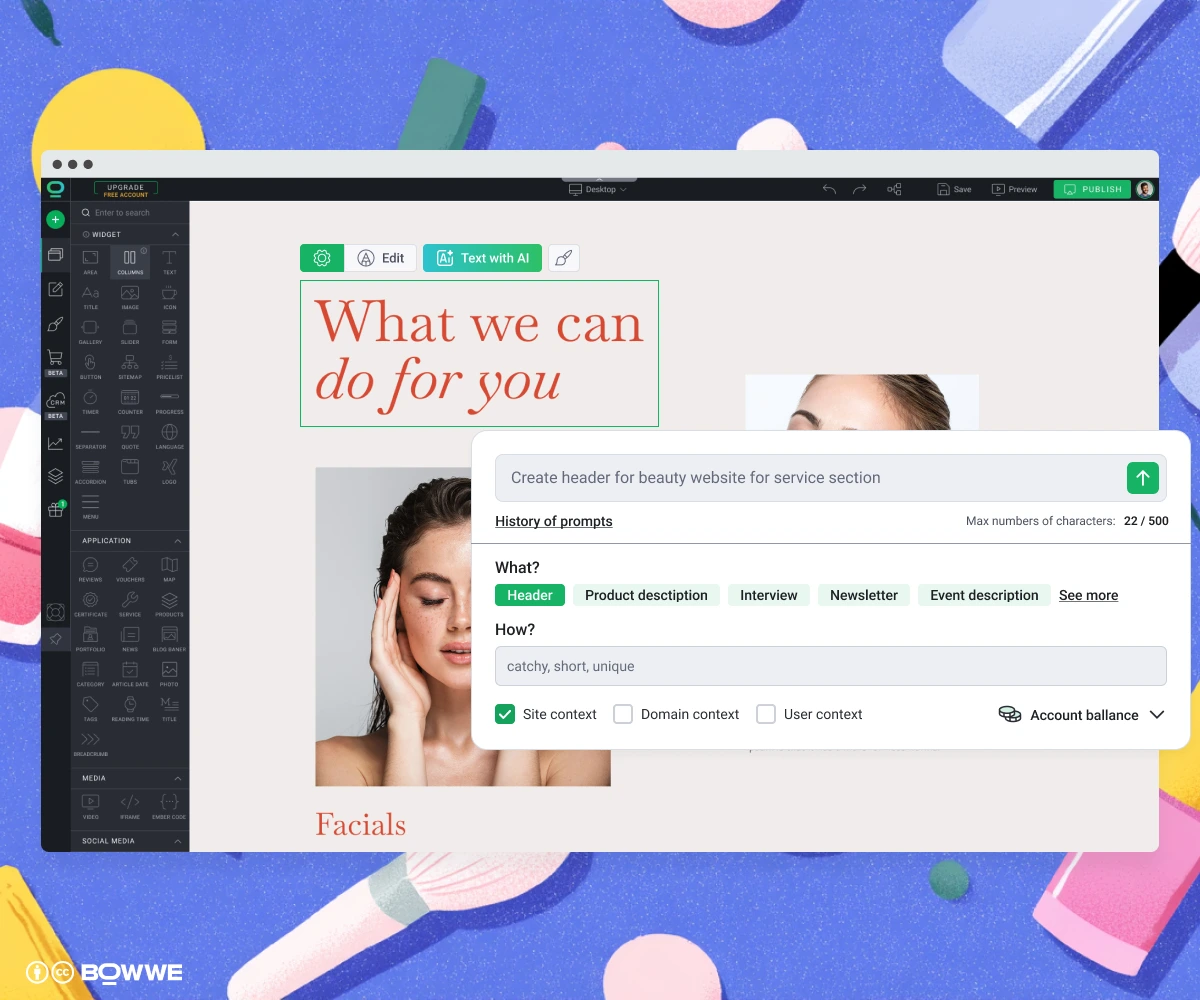
Anatomy of a high-converting service page:
- In H1 Combine your keyword, city, and one irresistible hook: “Brow Lamination in Denver (with free after-care kit)”.
- For hero image use before/after photo, compressed to <150 KB in WebP format, with a geo-tagged filename like brow-lamination-denver-before-after.webp.
- Mention price and service duration in visible places. Google loves concrete numbers (e.g., “$89 | 45 min”).
- Pull 5–7 real questions from the People Also Ask box for the FAQ section and add schema for FAQ to boost your chances of getting featured.
- Adding reviews from satisfied customers will also help. You can use the Google Business Profile API to keep them updated automatically.
- Don’t forget about the sticky CTA button: “Book Now – $89” that stays visible as they scroll.
2.4. Blog
In your blog articles use SEO-winning structure:
- Keep titles under 60 characters and start with your keyword: “Lash Lift Aftercare Tips – Dermatologist Approved”
- Open with a relevant fact or quote to hook readers.
- For H2s mirror actual search questions (use Google's People Also Ask box as a cheat sheet).
- Add a tall, vertical image every ~350 words to increase shares and scroll depth. Of course, with relevant ALT description with fitting keywords.
- Always link back to matching service pages: “Thinking about a lift? See our Lash Lift page [LINK]”
3. Link building - earn local trust (and Google love)
The more relevant and local those links are, the more Google sees you as trustworthy. And no, you don’t need dozens. Just a few solid ones from the right places can boost your rankings, especially in your city.
Tactic
How to land it (copy, paste, tweak)
Bridal vendor swap
DM local wedding photographers: “Couples ask me for MUA recs - want to trade a ‘preferred partner’ link?”
Beauty-school resource page
E-mail admissions: “Can I write a 400-word ‘How to prep for your first salon job’ guest tip?”
Local round-up lists
Pitch lifestyle bloggers: “Happy to share 3 pro brow-care hacks in exchange for a cite”
Supplier shout-out
Send before/after photos to your lash-lift brand - ask to be listed under “Certified Artists”
Subject: Loved your reel on [topic] - quick collaboration idea
I run [Salon] in [City] (4.9⭐ on Google). I’ve seen your brides pop up in our brow lamination pics - love your work!
Would you be up for a simple link swap on our sites?
I can send over a before/after photo and a short beauty tip your readers might like.
-- [Your Name]
- Matching service page
- About page
- Contact / booking link
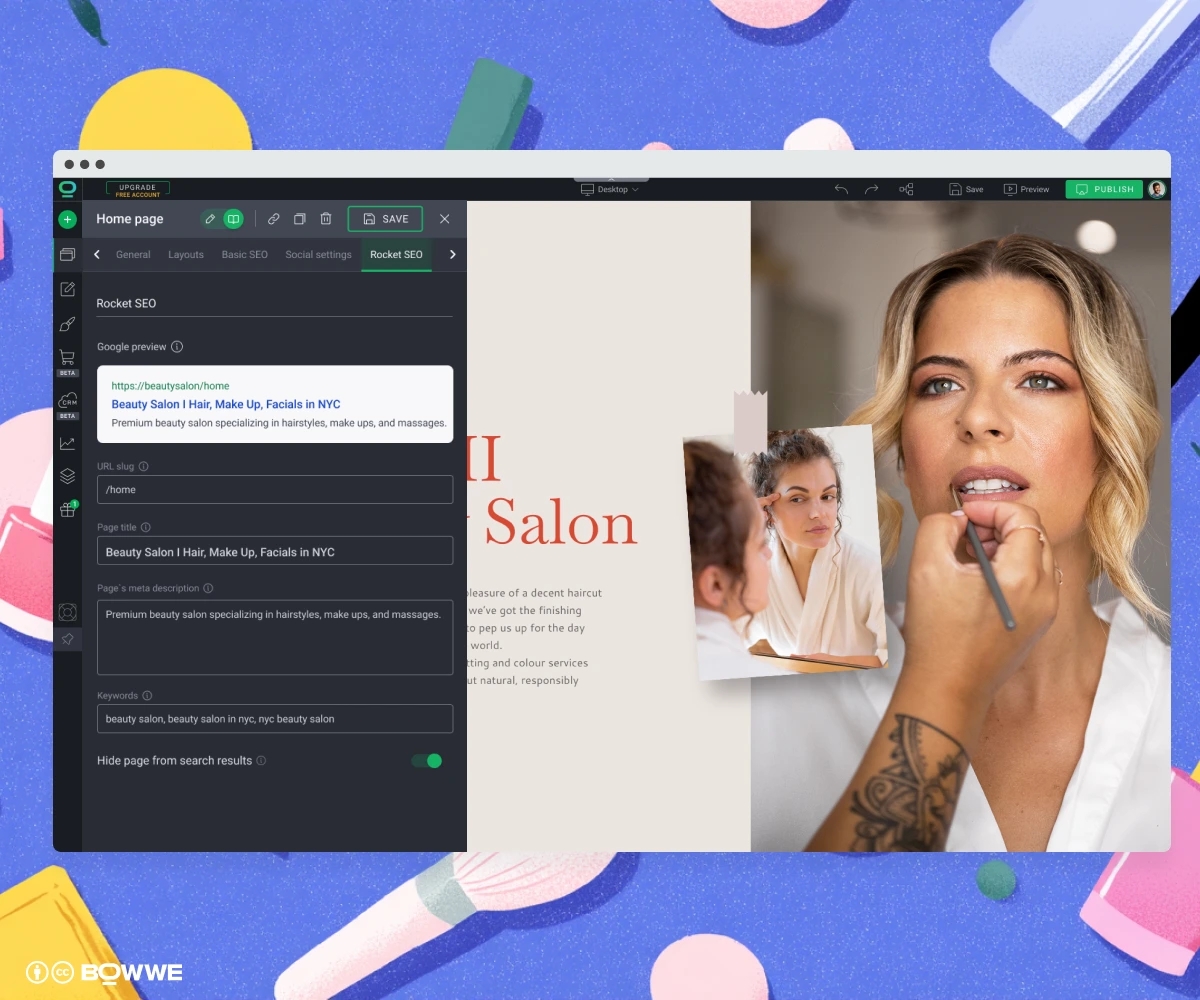
4. Meta Title & Meta Description - Boost clicks before clients visit your site
4.1. Meta title
- clearly explain what the page is about,
- include primary keywords,
- be compelling enough to make people want to click,
- be under 60 characters so it doesn’t get cut off in search results.
- example of SEO-optimized meta title: "Best Beauty Salon in [City] | [Business Name]".
4.2. Meta description
- stick under 160 characters,
- describes what the page offers,
- includes your target keywords,
- encourages action.
Example of good meta description structure: "Discover our luxurious beauty treatments at [Business Name]. Book your appointment today. Serving [City] and surrounding areas".
5. Image ALT description - Help Google ‘see’ your before & afters
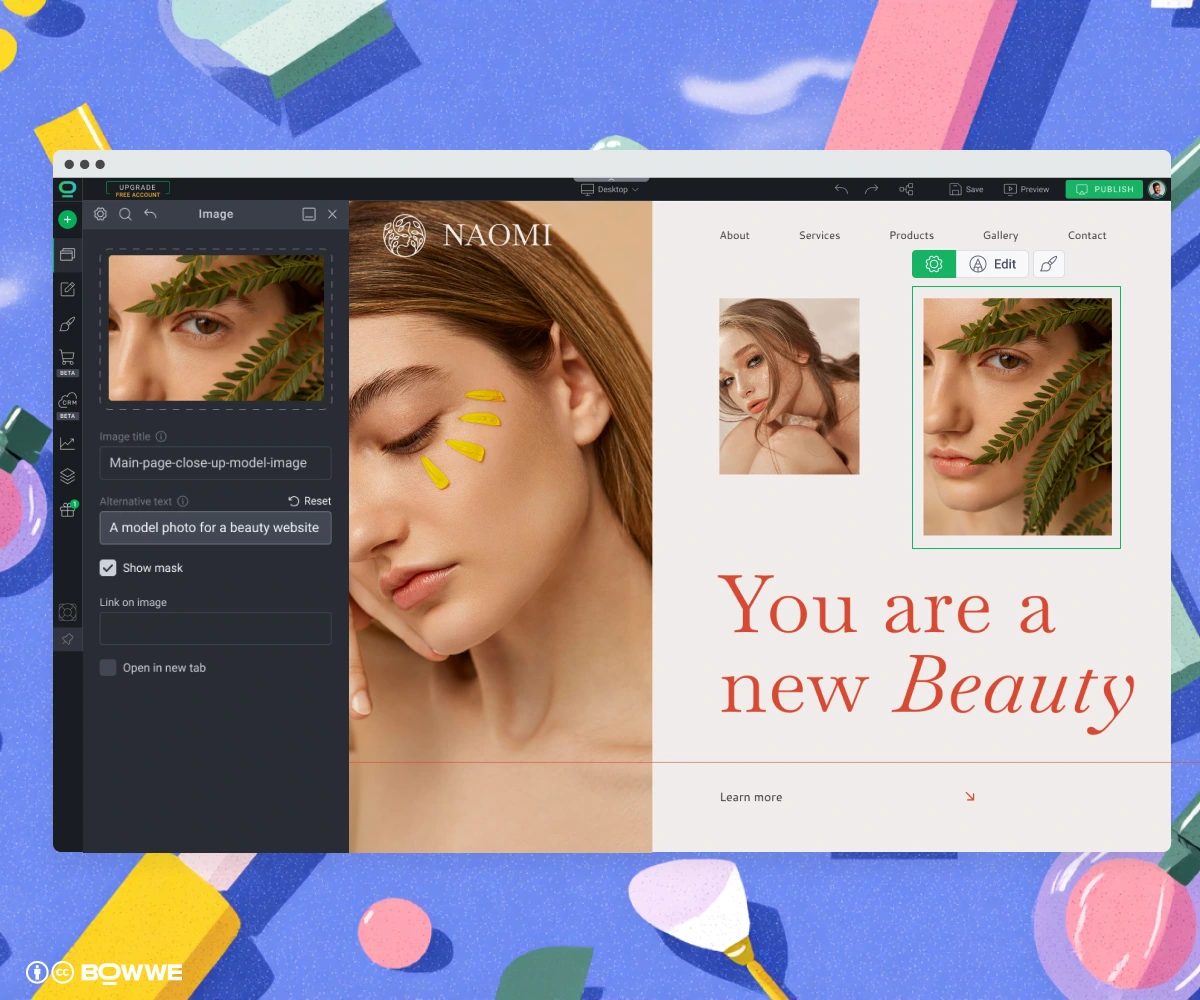
How to craft an effective ALT?
- Write a single, plain-language sentence that first describes the scene,
- Then (if it fits naturally) drops in a keyword and a local cue: “Before and after vegan lash lift on brunette client at Denver beauty salon”.
- Keep it conversational and under about 125 characters so screen readers don’t trail off mid-sentence.
File names and weight matter too. Rename IMG_8734.JPG to something meaningful like vegan-lash-lift-before-after.webp, export in WebP (150 KB or less), and if the shot highlights local work, embed a geotag. Fast, well-labelled images load quickly and can land you extra impressions in visual search for queries like “lash lift near me”.
6. SEO-friendly URL - Make every page clickable and crawlable
What’s more Google’s crawler still scans the URL for context. If it sees /services/brow-lamination-denver, it already knows the page is local and treatment-specific. A messy string full of IDs and question marks gives no such clues and can trigger duplicate-content headaches.
To create SEO-friendly URL for your beauty salon website:
- describe the page in five words or fewer,
- all lowercase,
- separated by hyphens,
- don’t use random numbers and other characters,
- you can follow this example: https://yoursite.com/services/brow-lamination-denver.
7. Structured Data - Help Google understand your beauty salon site
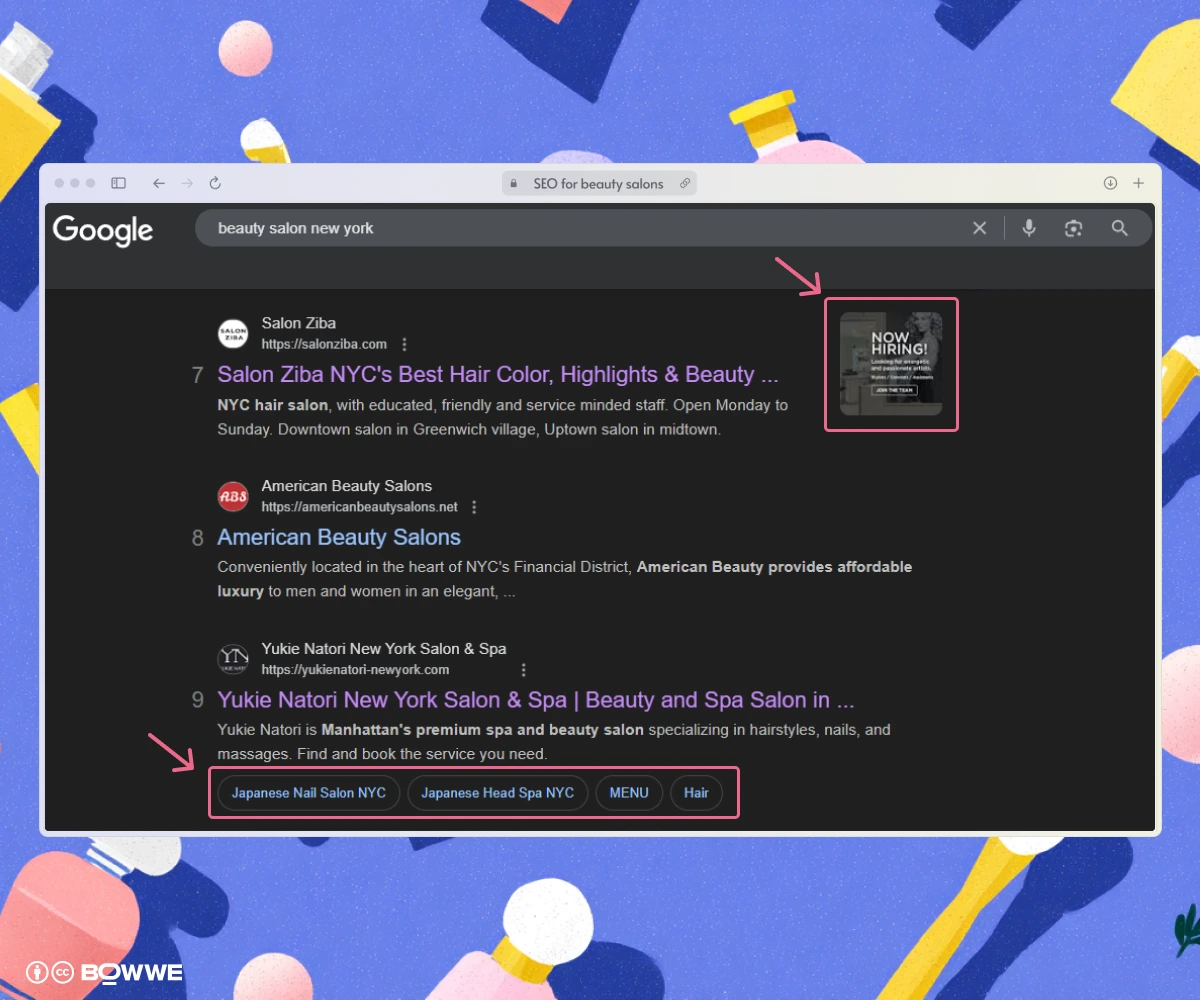
For a beauty salon, three schema types pay off fastest:
- LocalBusiness / BeautySalon – name, address, hours, price range.
- Service – each treatment, its duration, and cost.
- FAQPage – the Q&A blocks you add for after-care and eligibility.
Add those and Google can show rich snippets like ★ ratings, “$-$$$”, or expandable FAQs beneath your blue link - prime SERP real estate that pulls extra clicks.
After publishing, paste the URL into Google’s Rich Results Test. A green check means you’re eligible for snippets; any warnings usually point out a missing field you can fix in seconds.
8. Responsiveness - Make your site look great on every screen
What Google (and guests) expect:
- No pinching or sideways scrolling - layouts must fluidly adapt.
- Text large enough to read (≈ 16 px body).
- Tap targets that are thumb-friendly (≈ 48 × 48 px).
- Media that resizes without blowing out the viewport.
Drop URL to Google PageSpeed Insights and the tool flags pinch-zoom issues, tiny fonts, or elements too close together. Fix, re-test, done.
9. SSL – Show visitors (and Google) the lock icon they trust
How to get SSL for your beauty salon website:
- when buying a domain, packages are often offered in which the cost of the certificate is included,
- some site builders like BOWWE, for example, offer SSL in their plans.
10. Indexing – Make sure every money page is discoverable
How to make sure your key content is indexable and visible:
- Make sure your site has one Robots.txt file at the root.
- Allow everything under /, but block private or useless paths like: /cart/, /print-page/, or URLs with weird query strings.
- Submit your sitemap in Google Search Console (BOWWE auto-generates /sitemap.xml).
- Make sure that important pages do not have the NOINDEX tag.
Grow your beauty salon with SEO - Summary
- Keyword Research – Find the exact phrases potential clients search before booking.
- Content Creation – Build service and blog pages around those keywords to drive bookings.
- Link Building – Earn backlinks from local vendors, suppliers, and industry partners.
- Meta Titles & Descriptions – Write clear, click-worthy snippets for every page.
- Image ALT Descriptions – Describe your photos with keywords to help Google “see” them.
- SEO-Friendly URLs – Keep URLs clean, short, and filled with relevant words.
- Structured Data – Add schema markup so Google shows rich snippets for your services.
- Responsiveness – Make sure your site works beautifully on phones, tablets, and desktops.
- SSL – Secure your site with HTTPS to build trust with users and search engines.
- Indexing – Submit your sitemap and make sure every page is crawlable and visible.
Stick to this checklist and your salon will climb local SERPs, fill empty chairs, and book new clients while you’re mixing the next peel mask.
Ready to launch an SEO-ready beauty site?
Start free with BOWWE - templates, Rocket SEO, and AI content built in.
Start Free!
Beauty salon SEO - FAQ
How long does it take for salon SEO to work?
Local map-pack movement often shows up within 4–6 weeks; solid organic gains usually appear around month three once Google has recrawled key pages.
Do I really need separate pages for each service?
Yes. A dedicated brow-lamination URL lets you target “brow lamination near me” while a separate lash-lift page ranks for its own keywords - one page can’t rank well for everything.
Is blogging still worth it for the beauty industry?
What’s the ideal review count on Google Business Profile?
Aim for at least 40–50 recent reviews. Volume plus recency tells Google (and people) you’re trusted and active.

Karol is a serial entrepreneur, e-commerce speaker among others, for the World Bank, and founder of 3 startups, as part of which he has advised several hundred companies. He was also responsible for projects of the largest financial institutions in Europe, with the smallest project being worth over €50 million.
He has two master's degrees, one in Computer Science and the other in Marketing Management, obtained during his studies in Poland and Portugal. He gained experience in Silicon Valley and while running companies in many countries, including Poland, Portugal, the United States, and Great Britain. For over ten years, he has been helping startups, financial institutions, small and medium-sized enterprises to improve their functioning through digitization.